SaaS Growth UX
Spider AF
Turned Spider AF's global SaaS security website into a clearer growth platform through stronger UX structure, conversion paths, localization, SEO, and measurement.
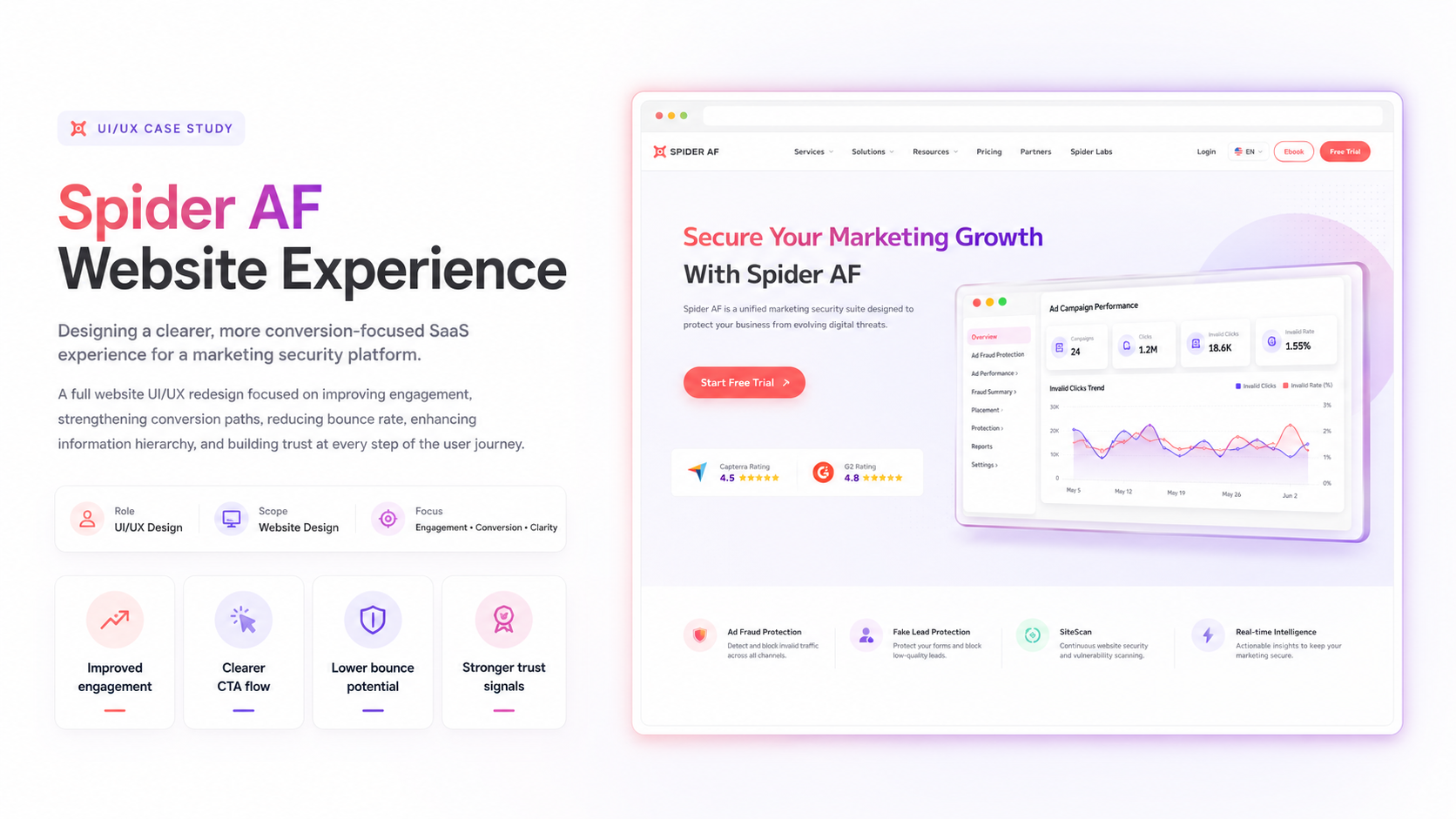
Spider AF had strong credibility in Japan, but the global site needed clearer market positioning, stronger trust signals, better conversion paths, and a scalable structure for international growth.
Improved the global website experience across engagement, conversion opportunities, localization, SEO structure, brand consistency, research workflows, and AI-assisted quality control.
Quick Context
Spider AF is a SaaS fintech and digital security company originally known for ad fraud prevention. Over time, the product evolved from a single-purpose ad fraud prevention platform into a broader digital security ecosystem built for digital marketers, advertisers, agencies, and growth teams.
I joined Spider AF as a UI/UX specialist to support both the product experience and the public-facing website. My early work focused on identifying friction across customer-facing touchpoints, including product usability, website engagement, sign-up flows, onboarding, and conversion paths.
As the company’s needs evolved, my role shifted more directly toward the global website and marketing experience. I worked closely with the marketing team to improve engagement, increase conversion from sign-up to onboarding, support SEO growth, and create landing pages for different markets, campaigns, and product use cases.
Spider AF operates across two major web properties: a Japanese site and a global site. The Japanese site already had stronger market recognition because Spider AF was founded in Japan and had established roots there. The global site needed a clearer growth strategy, stronger UX structure, better market positioning, and improved conversion paths.
The challenge became clear: how do we help a Japanese SaaS security company communicate trust, technical expertise, and product value to a global audience while improving measurable website performance?
 Website roadmap and growth priorities - open larger
Problems
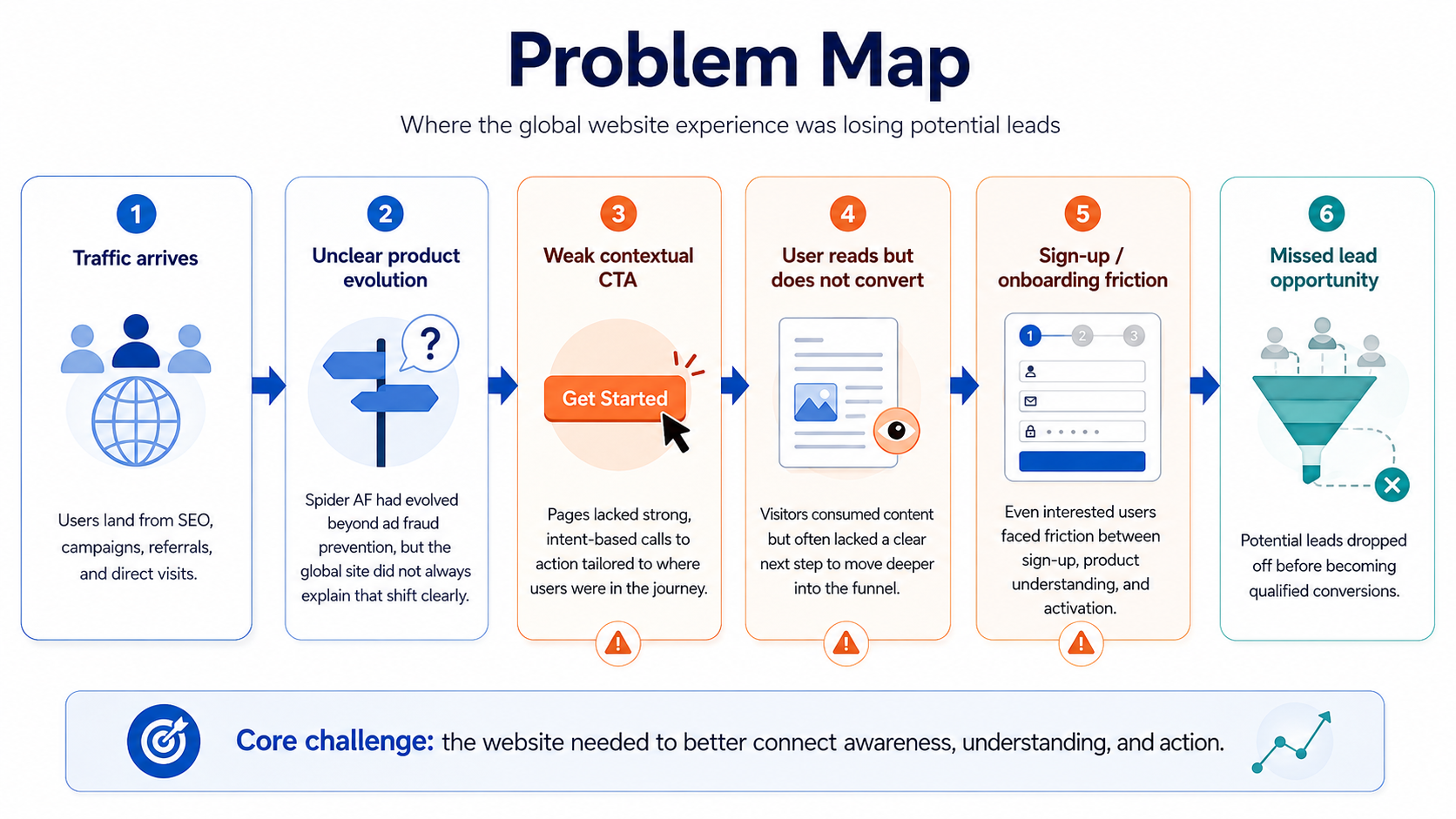
Spider AF had a strong product and strong credibility in Japan, but the global website needed to do more than explain the offer. It needed to educate new audiences, build trust quickly, support multiple markets, and convert visitors into qualified leads.
The core UX and marketing challenge was not just visual design. It was improving how users understood the company, how they moved through the website, and how quickly they could identify the right solution for their needs.
The Global Website Needed Stronger Market Clarity
Spider AF had evolved beyond ad fraud prevention, but the global website still needed to communicate that shift clearly. Visitors from different regions, industries, and awareness levels needed to quickly understand that Spider AF was becoming a broader digital security ecosystem for marketers.
The previous experience risked placing too much responsibility on the user to figure out what Spider AF does, which use case applies to them, why fraud prevention matters to marketing performance, and what step they should take next.
Conversion Points Needed to Be More Intentional
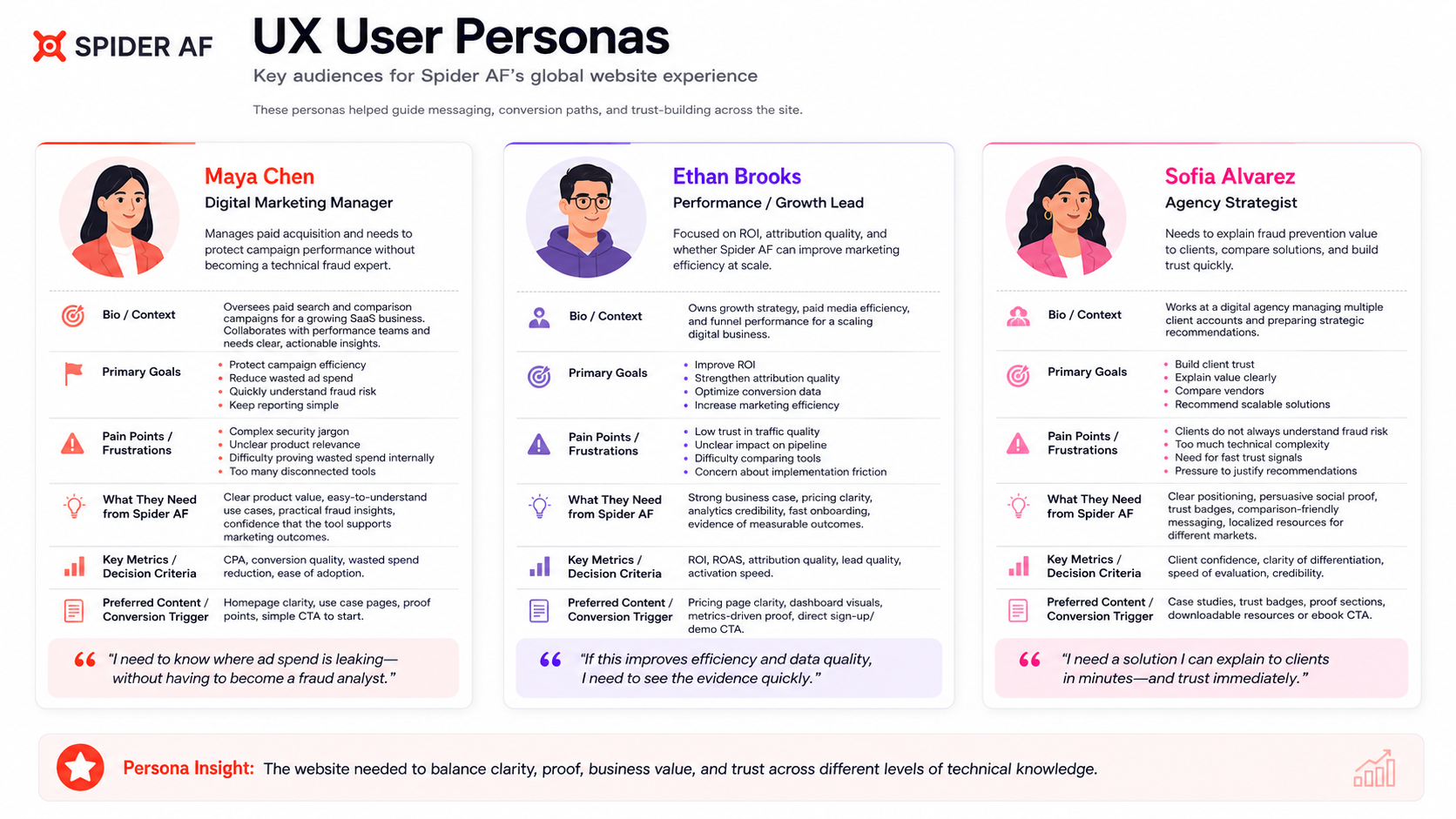
High-traffic pages such as the homepage, articles, use cases, pricing page, and sign-up page were important entry points. Users arrived from SEO, campaigns, referrals, and direct traffic, but the experience needed clearer pathways from education to action.
The issue was not simply adding more buttons. The challenge was understanding where users were in their decision-making journey and placing the right conversion points at the right moments.
The Global Brand Needed Consistency Without Losing Local Relevance
The Japanese site reflected the company’s established market presence, while the global site needed to grow visibility and trust across international markets.
This became especially important as localization expanded into Spanish, Dutch, and Portuguese. Localization was not only a translation task. It required thinking about regional expectations, terminology, user intent, SEO behavior, and how different audiences understand digital security.
Website Optimization Needed Better Research and Measurement
To improve the global website, I needed to identify what was working, what was underperforming, and where users were dropping off. This required a research-driven approach using Ahrefs, Microsoft Clarity, Google Analytics, Google Search Console, GTM, and VWO for A/B testing.
Decisions
The strategy was to reposition the global website as a growth-focused digital experience rather than a static marketing site. Every design and UX decision needed to support clearer communication, stronger trust, better engagement, and more qualified conversions.
Reframe the Website Around User Intent
One of the biggest decisions was to evaluate each major page based on the user’s likely intent.
Instead of asking, “How can we make this page look better?” the better question became, “What does the user need to understand, feel, and do on this page?”
This guided improvements across high-impact areas:
- Homepage visitors needed a clear overview and fast product understanding.
- Use case visitors needed proof that Spider AF could solve their specific problem.
- Article readers needed contextual CTAs related to the content they were consuming.
- Pricing visitors needed confidence, comparison, and reduced friction.
- Sign-up users needed a smoother path into onboarding.
Create Stronger Conversion Architecture
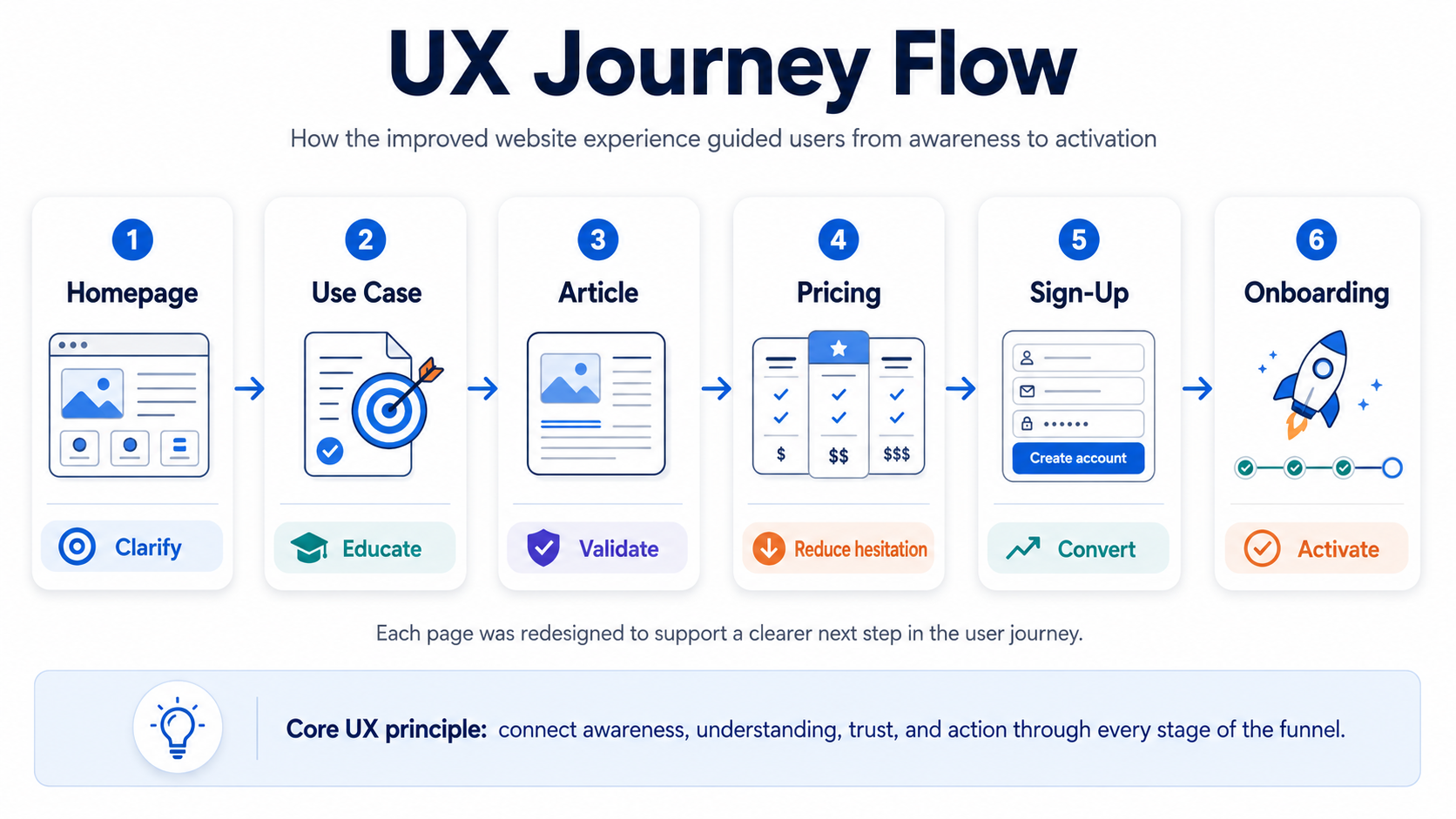
I focused on improving conversion points by making CTAs more contextual and better aligned with page content. A visitor reading an educational article might not be ready to request a demo immediately, but they may be ready to explore a related use case, download a resource, or learn how Spider AF solves that specific problem.
This created a more natural path: awareness, education, use case understanding, trust building, then sign-up or demo.
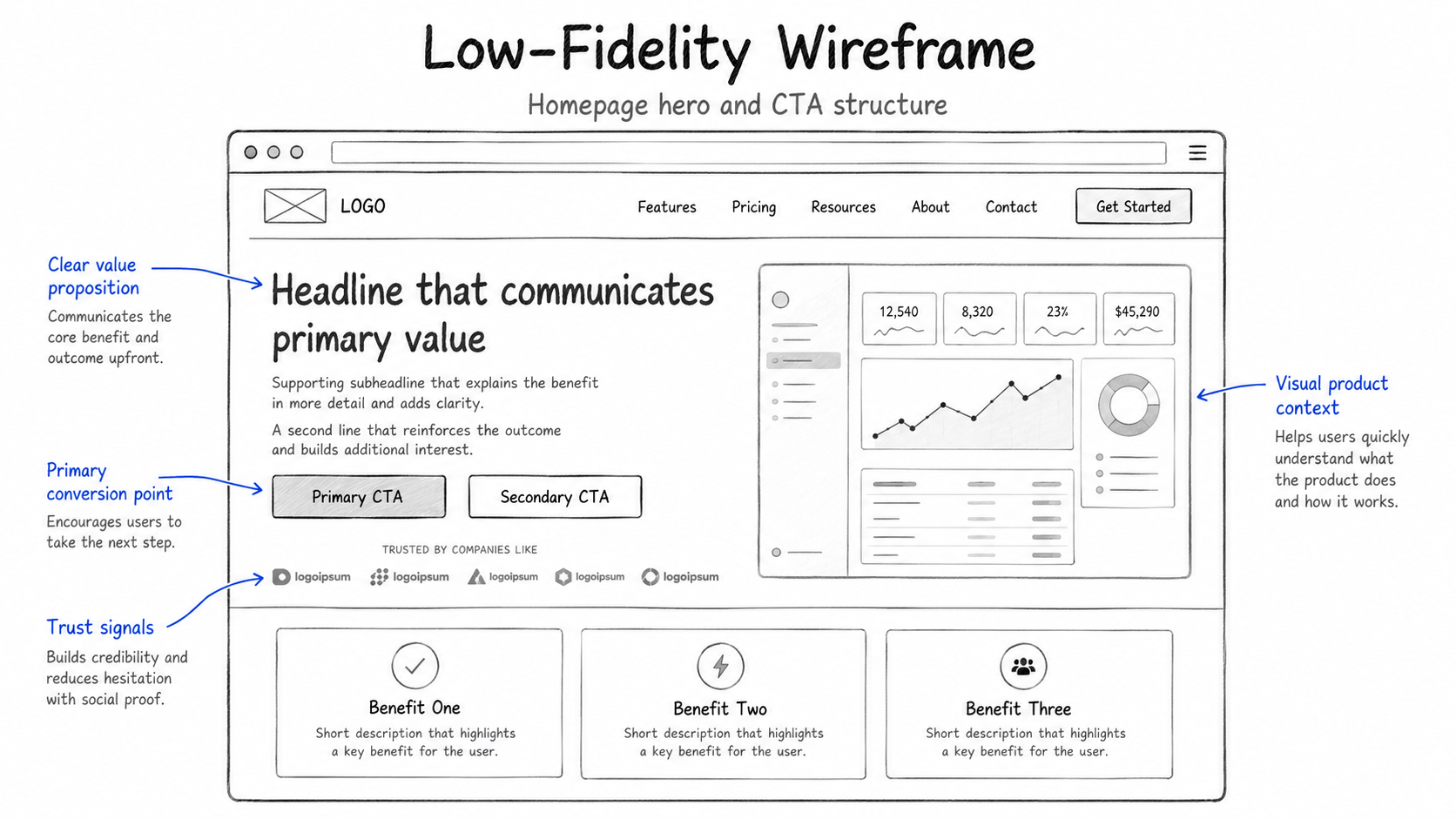
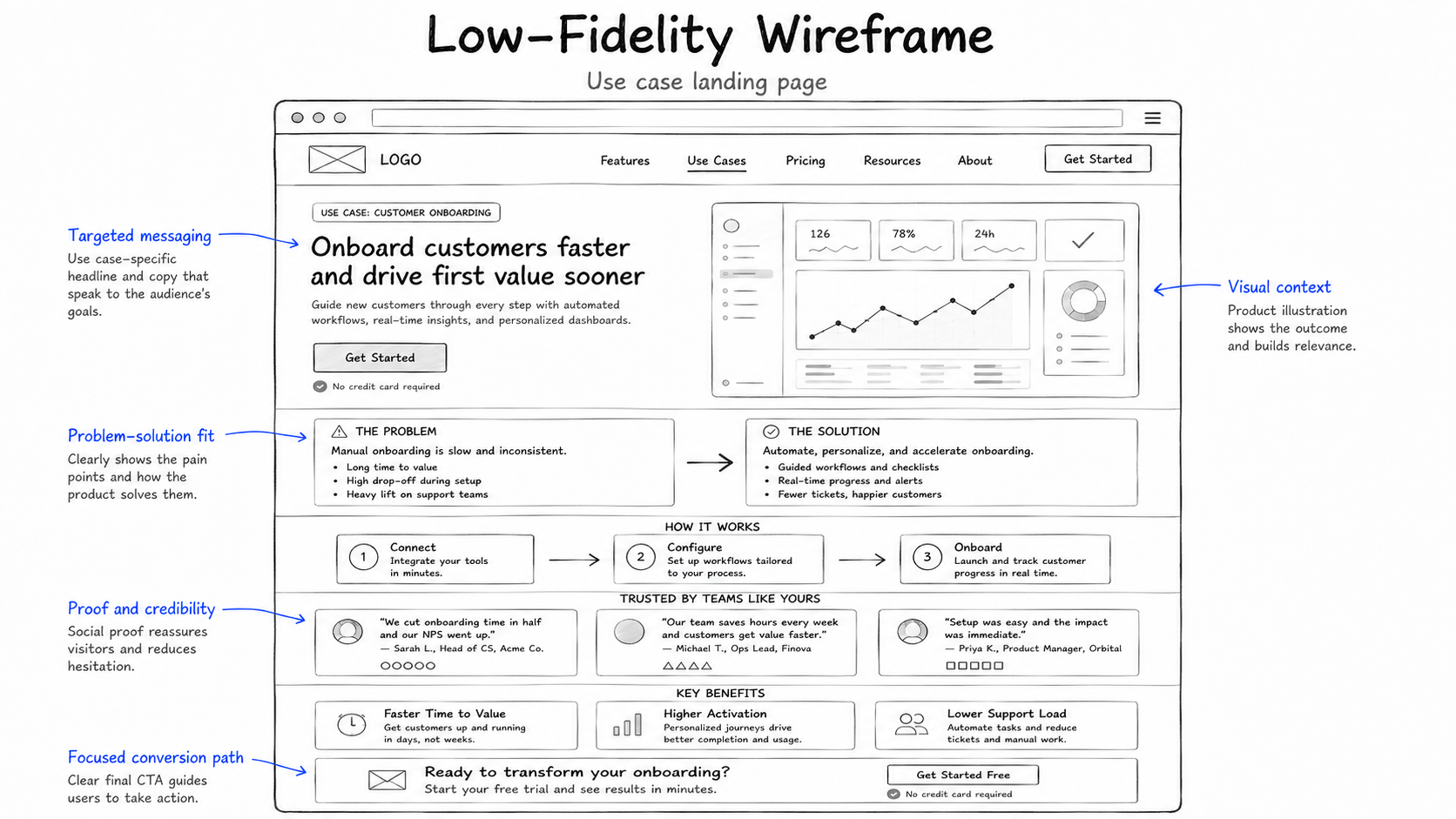
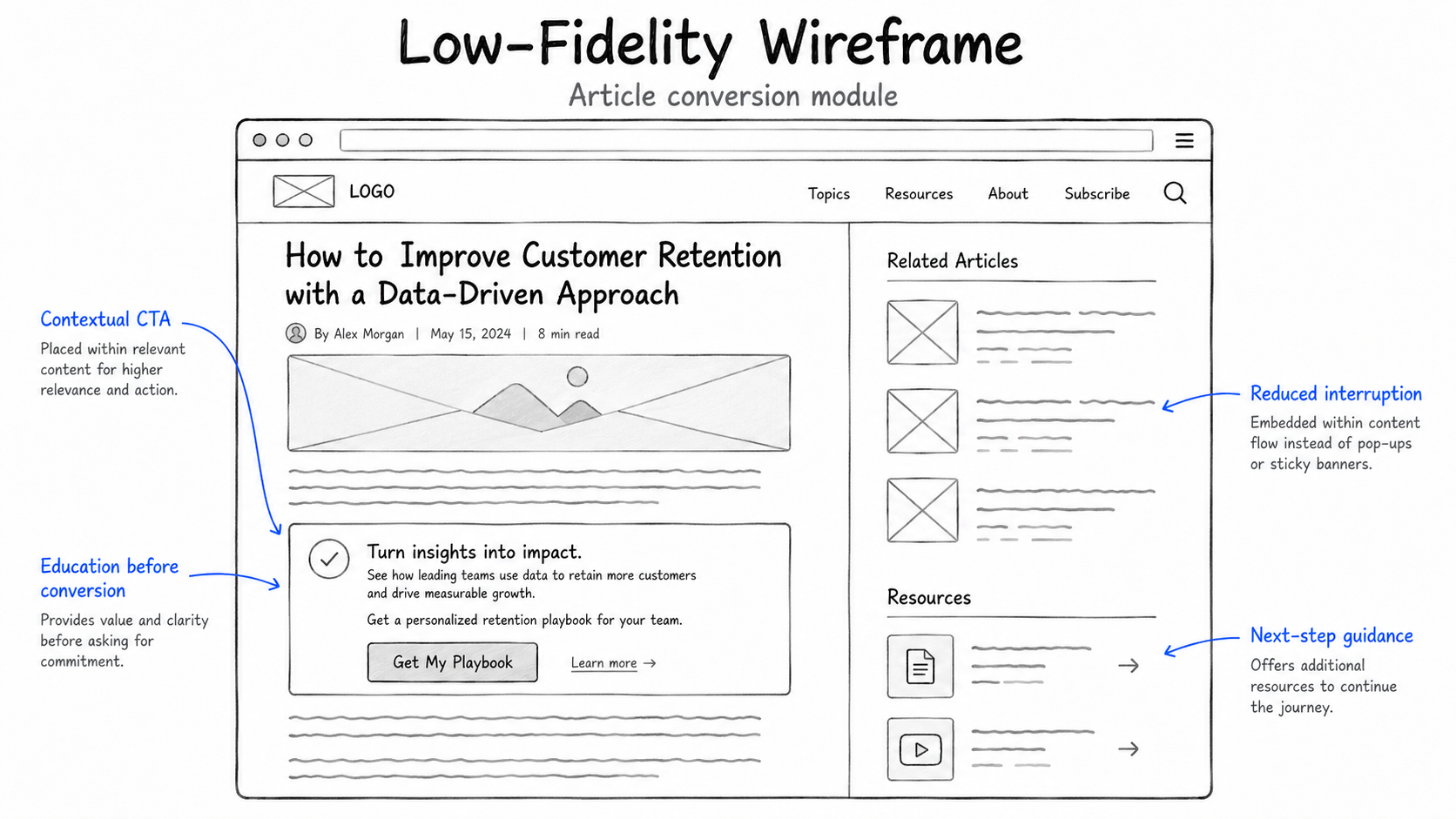
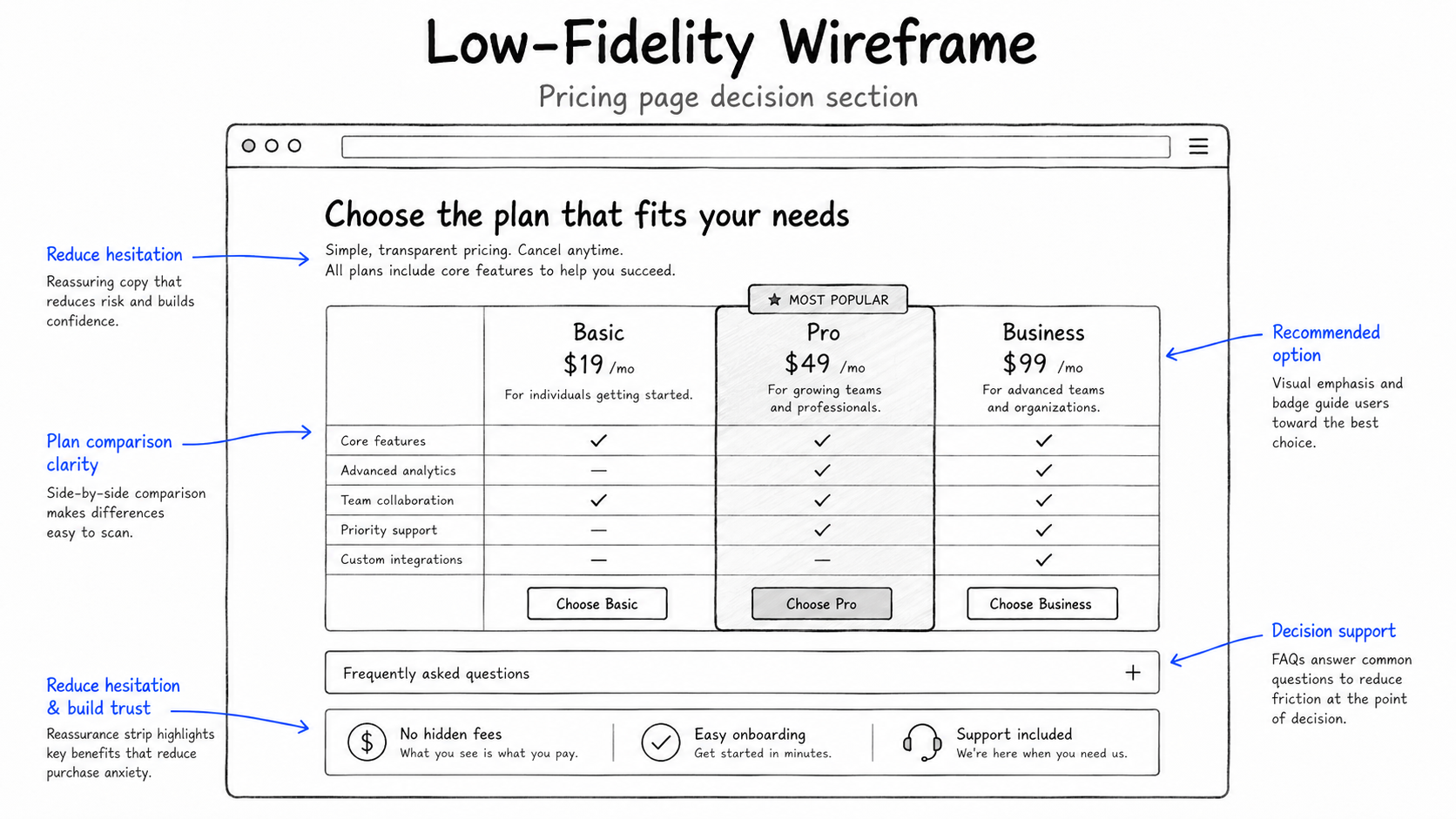
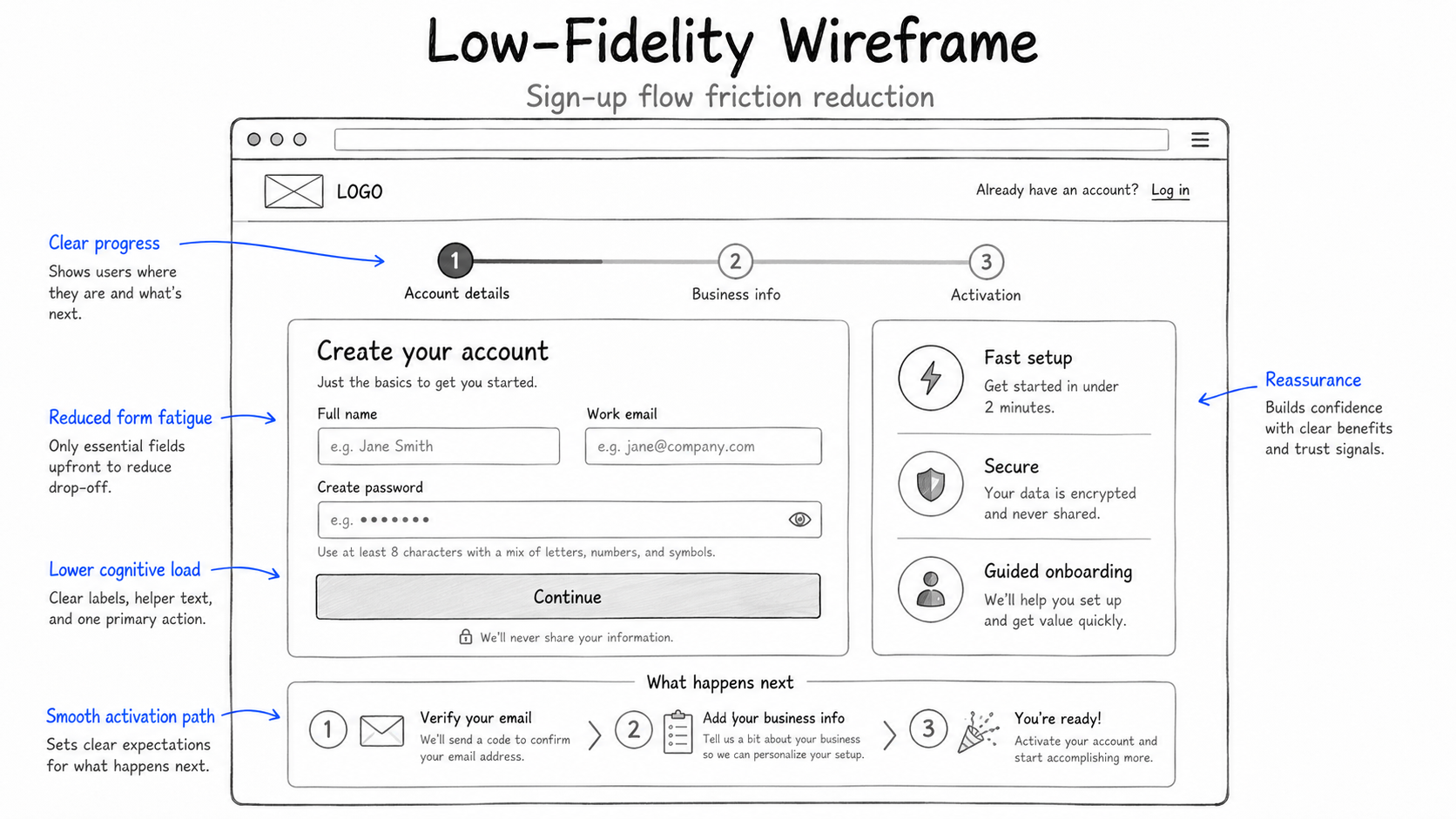 Sign-up and onboarding wireframe - open larger
Use Research Tools to Guide UX Improvements
To avoid relying only on assumptions, I used a combination of analytics, heatmaps, SEO tools, and testing platforms to guide decisions.
Ahrefs and Google Search Console helped identify SEO opportunities, keyword gaps, and pages that could benefit from stronger content structure. Google Analytics helped track traffic patterns, engagement rates, and conversion performance. Microsoft Clarity revealed behavioral friction through heatmaps, scroll depth, and session recordings. VWO supported A/B testing opportunities, while GTM helped support event tracking across important conversion actions.
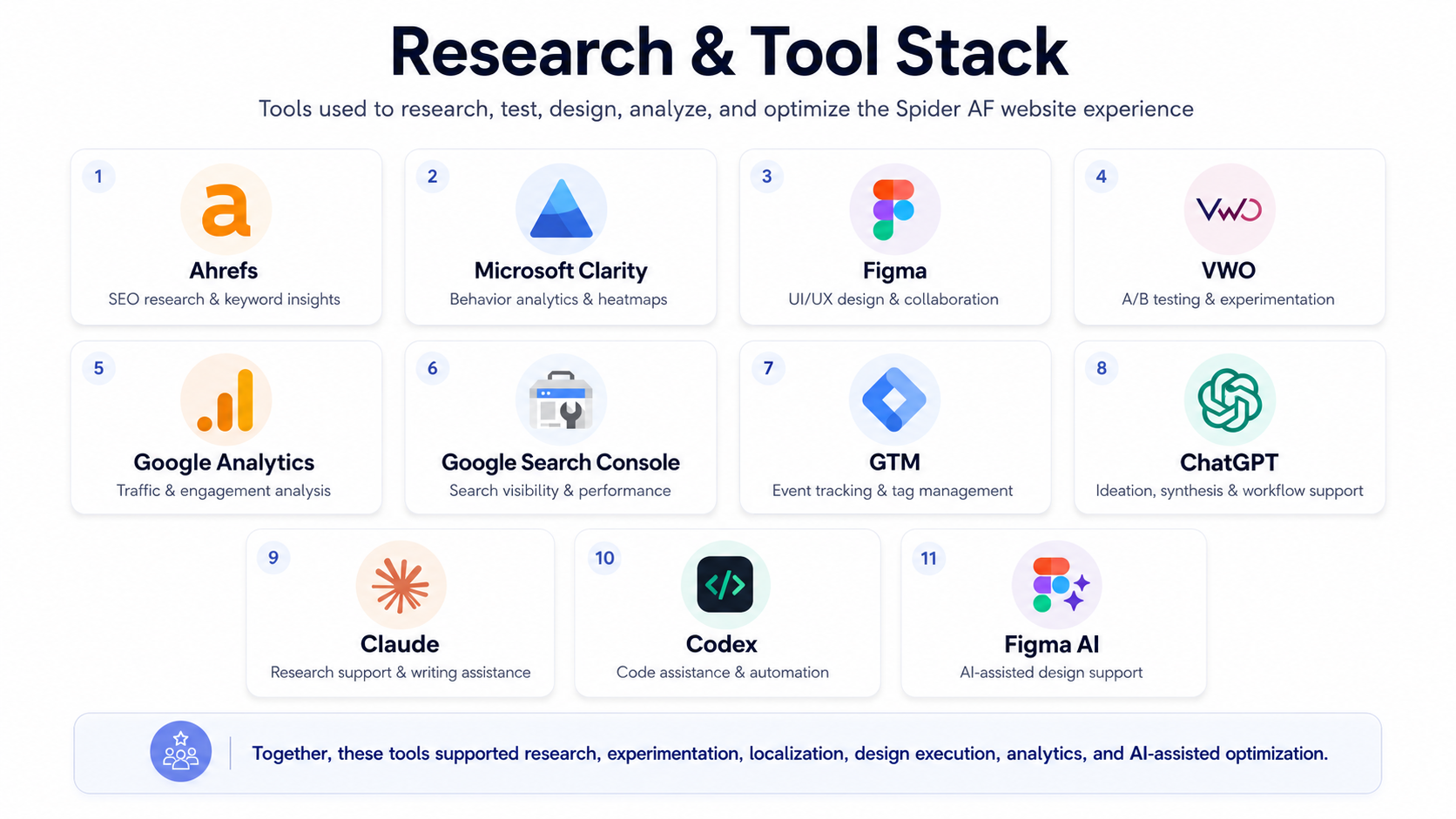 Research and measurement tool stack - open larger
Support Localization as a Growth Strategy
I initiated and helped lead the localization program, including spearheading the Spanish locale. This mattered because global growth required more than one English-language experience.
Localization created an opportunity to reach new audiences, improve international SEO, and make Spider AF feel more relevant to users outside Japan. The goal was not to translate pages word for word. The localization effort needed to consider market-specific language, regional search behavior, terminology used by digital marketers, consistent brand voice, localized page structure, and scalable content workflows.
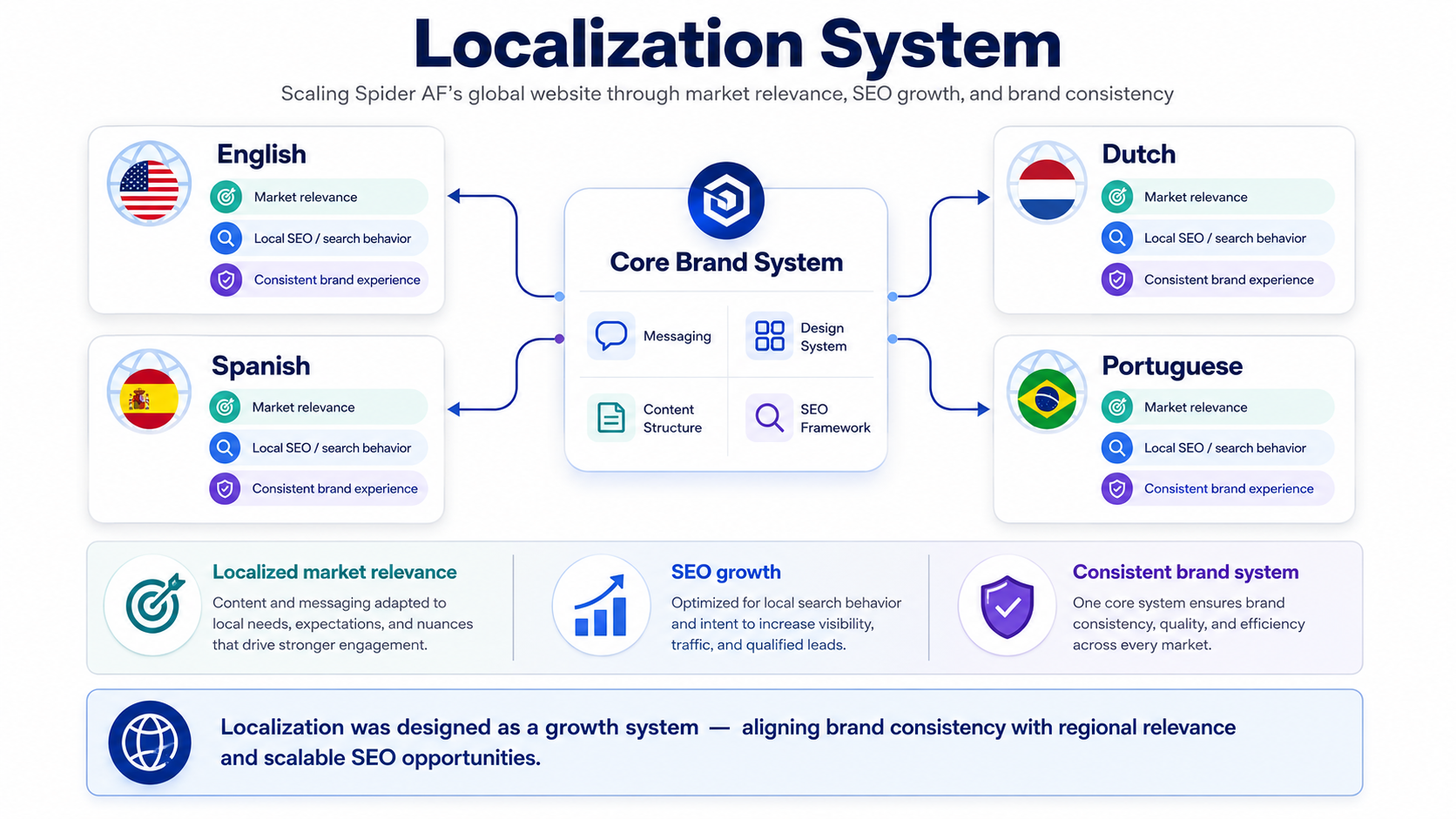 Localization system - open larger
Align the Japanese and Global Brand Experience
Another important decision was to keep the Japanese and global websites visually and strategically aligned while still allowing each site to serve its own market.
The Japanese site had a stronger foundation because Spider AF was already better established in Japan. The global site needed more support in positioning, trust-building, SEO, and conversion. The design challenge was to preserve a unified Spider AF identity without forcing the global site to simply mirror the Japanese experience.
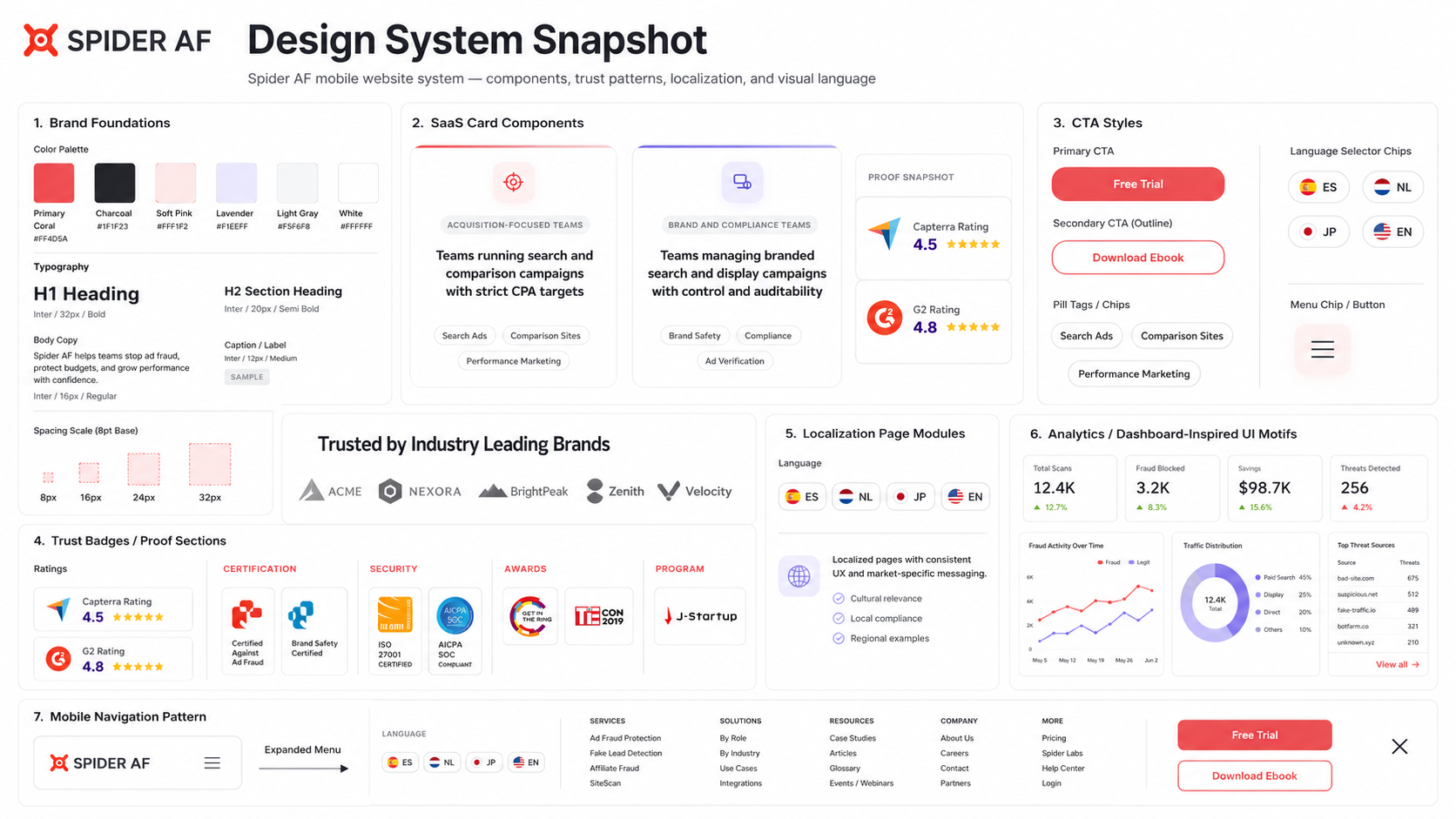 Website design system and brand consistency - open larger
Build Landing Pages for Campaigns, Use Cases, and Market Growth
As the global website matured, I created landing pages to support marketing initiatives, product education, and regional growth. These pages allowed Spider AF to speak more directly to different audiences and use cases instead of relying only on broad website pages.
Landing pages supported paid and organic campaigns, explained specific product benefits, improved SEO targeting, created clearer conversion paths, tested messaging and layout approaches, and adapted content for different markets.
Use AI to Improve Workflow Efficiency and Website Quality
Spider AF encouraged the use of AI tools, so I incorporated ChatGPT, Claude, Codex, Figma AI, and other AI-assisted workflows into the design and website optimization process.
AI was used to support ideation, content exploration, QA workflows, code review, automation, design support, and error detection. One of the most valuable uses was creating automations that helped identify website issues earlier. AI did not replace UX judgment. It helped speed up repetitive tasks, support research synthesis, and improve the team’s ability to maintain quality at scale.
Result
The work helped Spider AF’s global website become more strategic, measurable, and growth-focused. Instead of functioning only as a marketing brochure, the website became a stronger digital growth platform for international audiences.
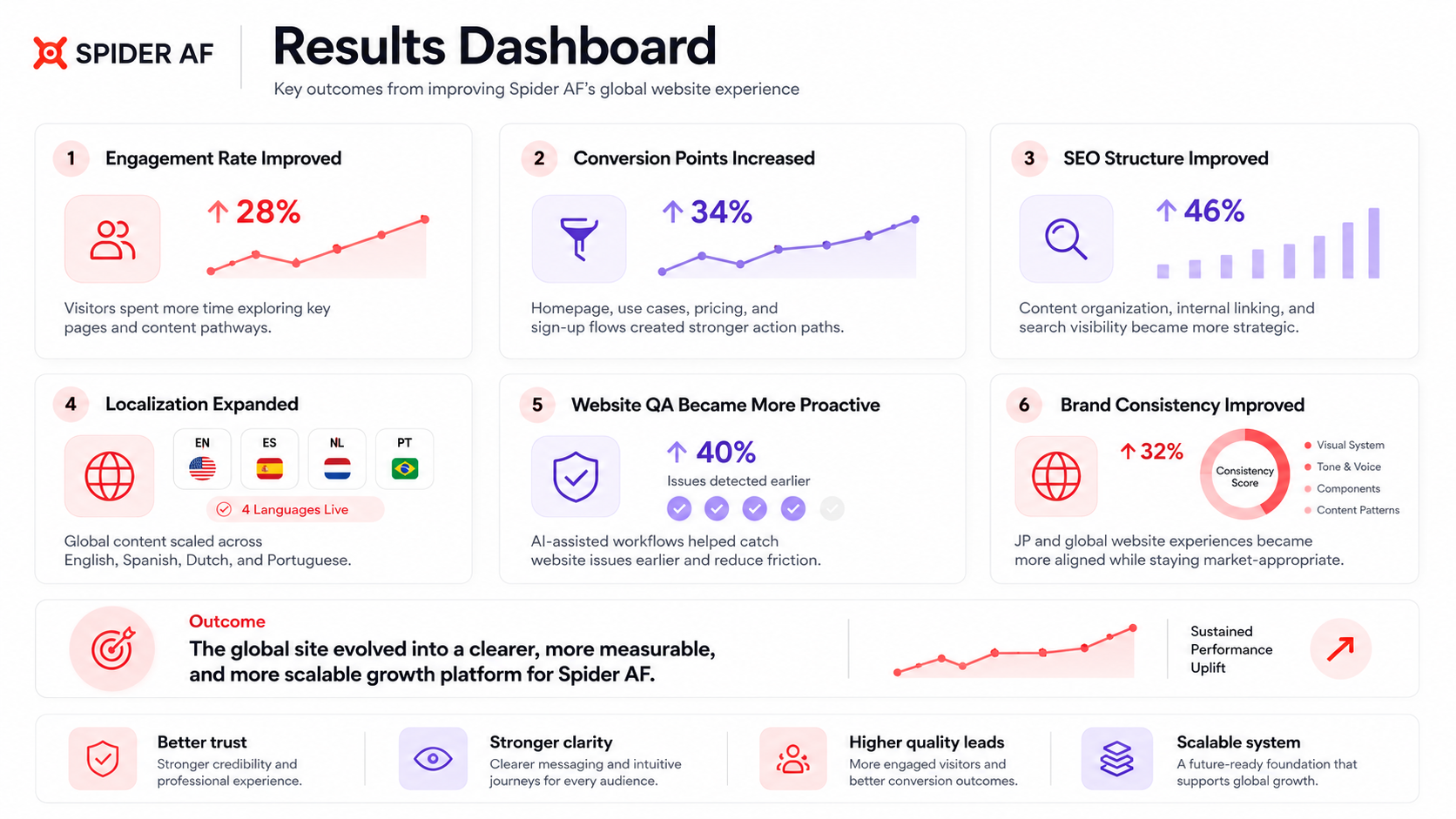 Results summary - open larger
Key outcomes included:
- Improved engagement across targeted website areas.
- Increased conversion points across high-traffic pages.
- Stronger connection between educational content and product use cases.
- Better alignment between the Japanese and global brand experience.
- Improved localization structure across Spanish, Dutch, and Portuguese markets.
- Creation of multiple landing pages to support campaigns and market-specific growth.
- More intentional UX flows from homepage, articles, use cases, pricing, and sign-up.
- Better measurement through analytics, heatmaps, A/B testing, GTM, and SEO tools.
- AI-supported workflows to identify website errors earlier.
- Stronger collaboration between UX, marketing, SEO, and growth initiatives.
The most important result was not a single page redesign. It was the creation of a more mature website system that could support global growth, communicate complex security value more clearly, and turn more visitors into engaged prospects.
Spider AF’s global site became better equipped to answer three critical user questions:
- What problem does Spider AF solve?
- Why should I trust this company?
- What should I do next?
Reflections
This project taught me that SaaS website UX is not only about interface design. It is also about positioning, education, trust, measurement, and business strategy.
Spider AF had a technically strong product, but the global website needed to translate that strength into a clearer user journey. The biggest challenge was helping users understand the value of a complex security product quickly, especially in markets where the brand was still building awareness.
I learned that strong UX for a SaaS marketing website requires a balance between qualitative and quantitative thinking. Visual design matters, but so do scroll behavior, search intent, conversion data, localization quality, page speed, SEO structure, and the user’s level of awareness.
I also learned the importance of designing for different markets without fragmenting the brand. A global website cannot simply be a translated version of the original. It needs to respect regional context while still feeling like one connected company.
In future projects, I would push even further into structured experimentation. I would create more detailed testing roadmaps, connect every major page improvement to a measurable hypothesis, and build stronger dashboards around the full journey from landing page visit to sign-up, onboarding, and activation.
Spider AF reinforced one of my biggest beliefs as a designer: a website is not just a place where a company explains what it does. It is a product experience, a sales tool, a trust-building system, and often the first real conversation a user has with the brand.