Service Website UX
Premier Printing Services
Designed a new service website for Premier Printing Services that made print capabilities easier to understand, improved quote-oriented paths, and created a stronger foundation for future ordering tools.
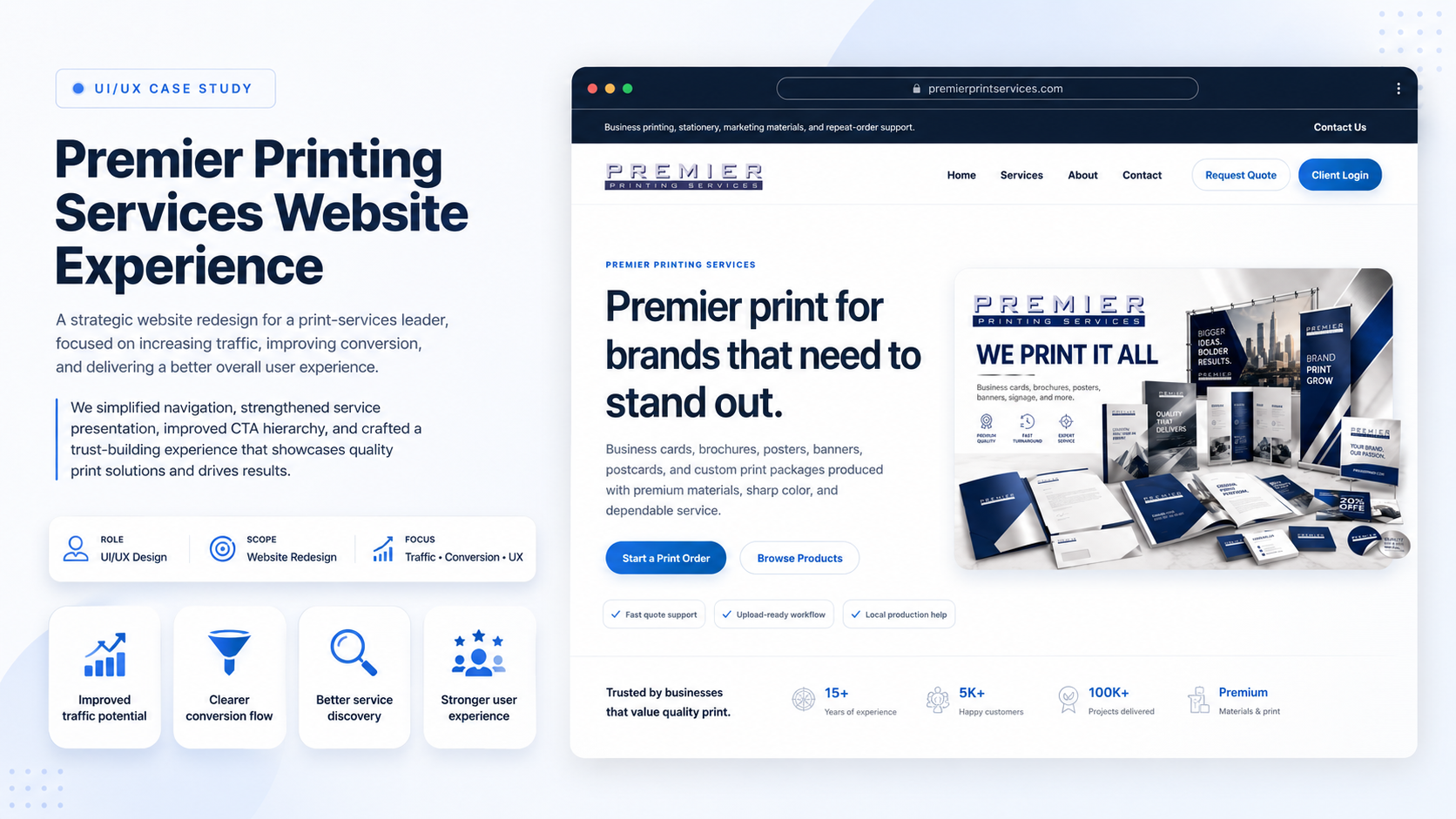
The business needed a clearer digital presence that could explain print services, build trust quickly, support quote requests, and eventually grow into more advanced customer ordering and portal experiences.
Shipped a new service website experience with clearer service discovery, stronger credibility cues, more intentional conversion paths, and a roadmap for future B2B and B2C print workflows.
Quick Context
Premier Printing Services needed a new website that could do more than show a list of printing capabilities. The business needed a clearer online presence for customers who were trying to understand what could be printed, what type of service fit their needs, and how to start a quote conversation.
The project was a new website design with UX/UI involvement around service organization, quote flow, credibility, and future platform planning. The immediate goal was to ship a polished marketing and lead-generation website. The longer-term opportunity was to create a foundation that could eventually support customer portals, online ordering, and more self-service print workflows.
This made the project both practical and strategic. The site needed to work as a clear service website now, while leaving room for more advanced print ordering experiences later.
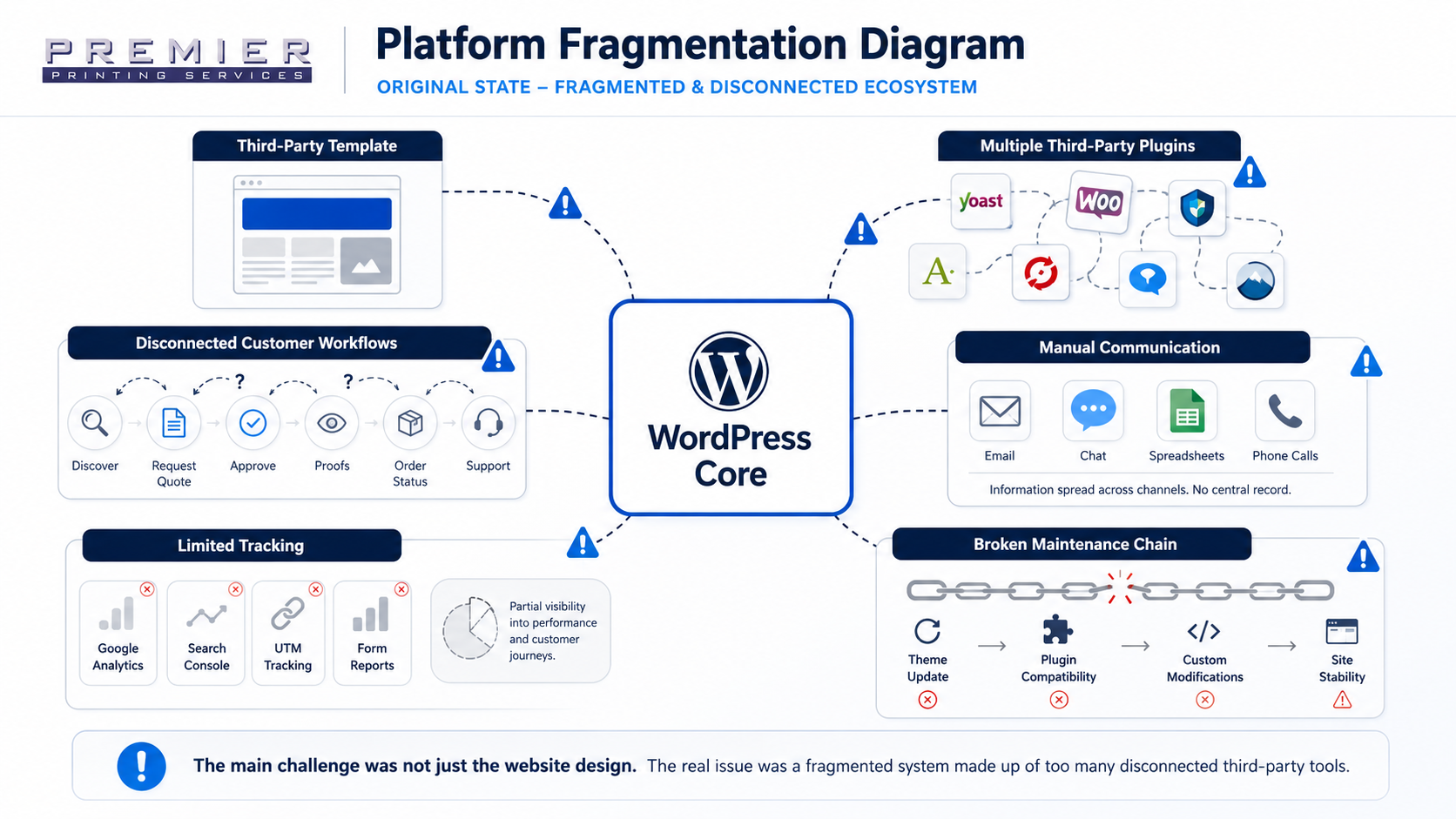 Business and platform fragmentation
Problems
Print Services Can Be Hard to Understand Quickly
Printing businesses often serve many customer types at once: small businesses, repeat B2B clients, one-time customers, marketing teams, event organizers, and people who simply need guidance on what to order.
That creates a UX challenge. A website can quickly become a dense list of products, services, paper types, finishing options, and technical language.
For Premier Printing Services, the website needed to make the offer easier to understand without oversimplifying the business. Visitors needed to know:
- What services are available.
- Which service fits their need.
- Whether the company can handle professional print work.
- How to request pricing or start a conversation.
- Whether the business feels trustworthy enough to contact.
The challenge was to turn service complexity into a clearer browsing and quote experience.
Quote Intent Needed a Clearer Path
For many print customers, the next step is not always an instant purchase. They may need a quote, a recommendation, file guidance, timing information, or confirmation that the shop can handle a specific job.
That means the website needed to support quote intent. Visitors should not have to dig through the site to understand how to contact the company or what information they might need to provide.
The design challenge was to make quote actions visible without making the site feel pushy or generic.
The Site Needed to Build Trust Before Contact
Print work is often tied to deadlines, business needs, events, marketing campaigns, or customer-facing materials. Before someone reaches out, the website has to create confidence.
Trust needed to come from:
- A professional visual presentation.
- Clear service categories.
- Easy-to-scan page structure.
- Strong examples of capability.
- Repeated but tasteful contact paths.
- A feeling that the business understands print production.
The website had to feel polished enough to reflect the quality of the work a customer would expect from a print provider.
Future Ordering Tools Needed a Foundation
Although the shipped project focused on the website, the larger opportunity was a more advanced print platform.
Future needs could include:
- B2B customer portals.
- Repeat-order workflows.
- Upload and proofing paths.
- B2C print ordering.
- Quote tracking.
- Account-based ordering.
- Better routing between customer requests and production.
The site did not need to launch with all of that functionality, but the design strategy needed to acknowledge where the business could grow.
Decisions
Organize the Website Around Service Discovery
The first decision was to make the site easier to browse by service need rather than forcing visitors through a generic company overview.
Service categories were treated as decision points. The goal was to help visitors quickly understand what Premier Printing Services could do and where to go next.
This helped the website serve both quick scanners and more serious buyers who needed to understand capabilities before requesting a quote.
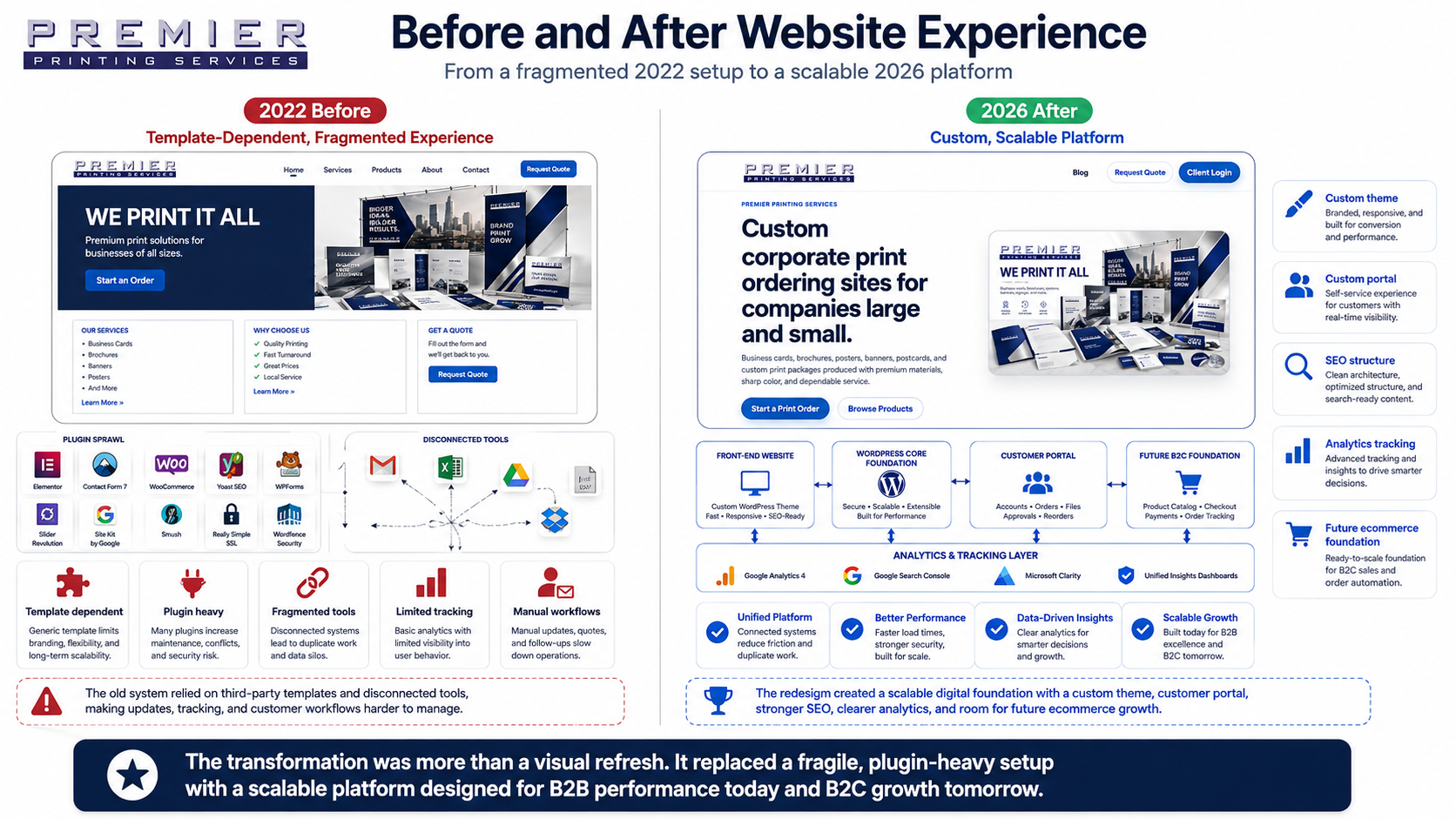 Before and after website experience
Design for Practical Customer Personas
The project considered the different types of customers who might arrive at the website.
Some visitors are ready to request a quote immediately. Others need to understand what services are available. Repeat business customers may care about speed and reliability. New customers may need reassurance before reaching out.
The design had to support these different behaviors without creating separate, overly complicated experiences for each group.
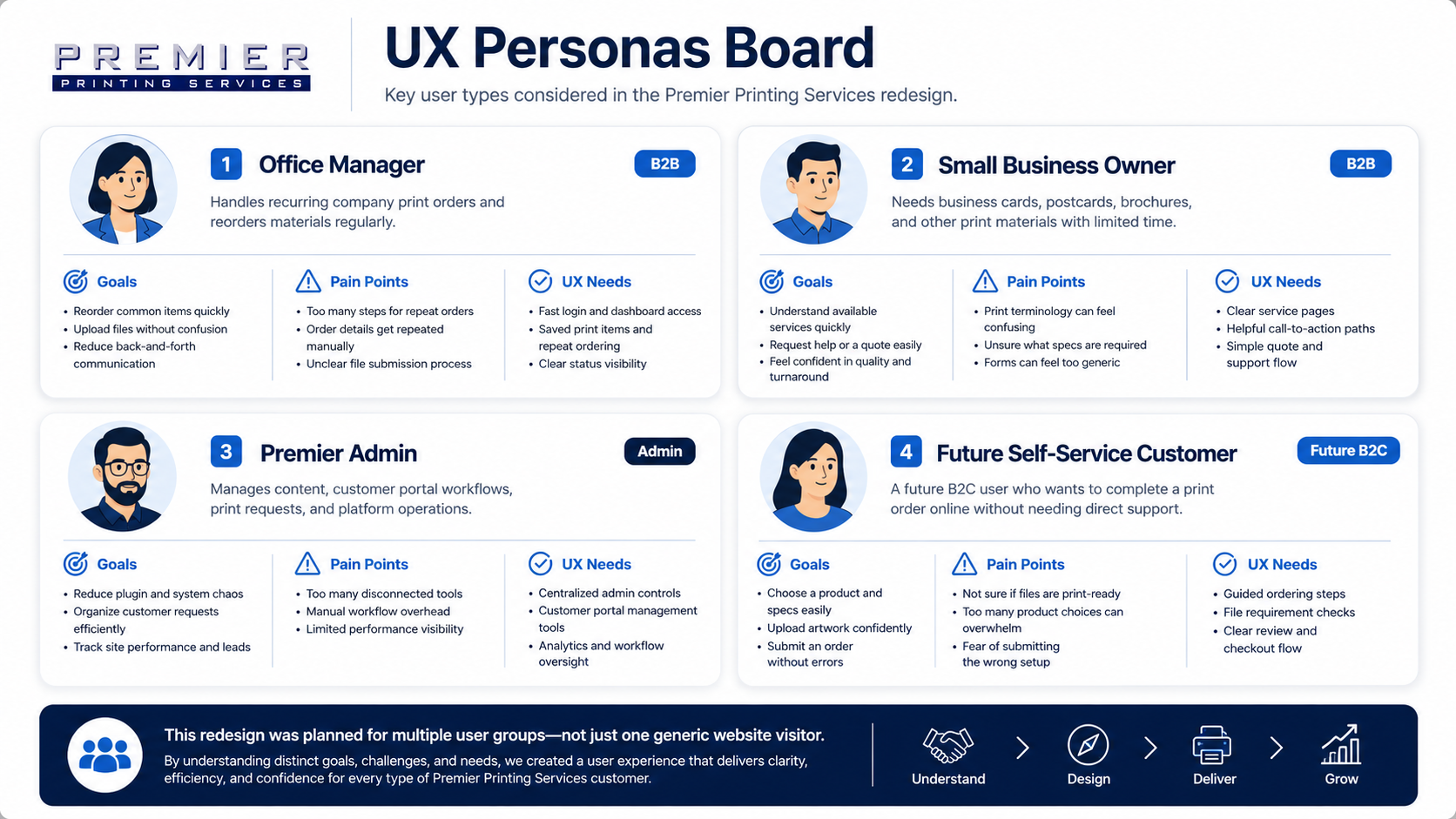 Customer needs and decision behaviors
Make Quote Paths Visible Across the Experience
Because quote requests were one of the most important actions, the site structure needed to keep contact paths close to service discovery.
The design approach was to create multiple natural quote moments:
- From the homepage after understanding the business.
- From service pages after browsing capabilities.
- From conversion-oriented sections that prompt action.
- From contact areas where users are ready to ask questions.
This gave visitors more than one path into a conversation without turning every section into the same call to action.
Use SEO and Conversion Planning Together
Service websites need to be findable and understandable. For Premier Printing Services, SEO planning and conversion planning were connected.
The content structure needed to support search visibility while still helping real visitors make decisions. That meant service organization, page hierarchy, and conversion paths had to work together.
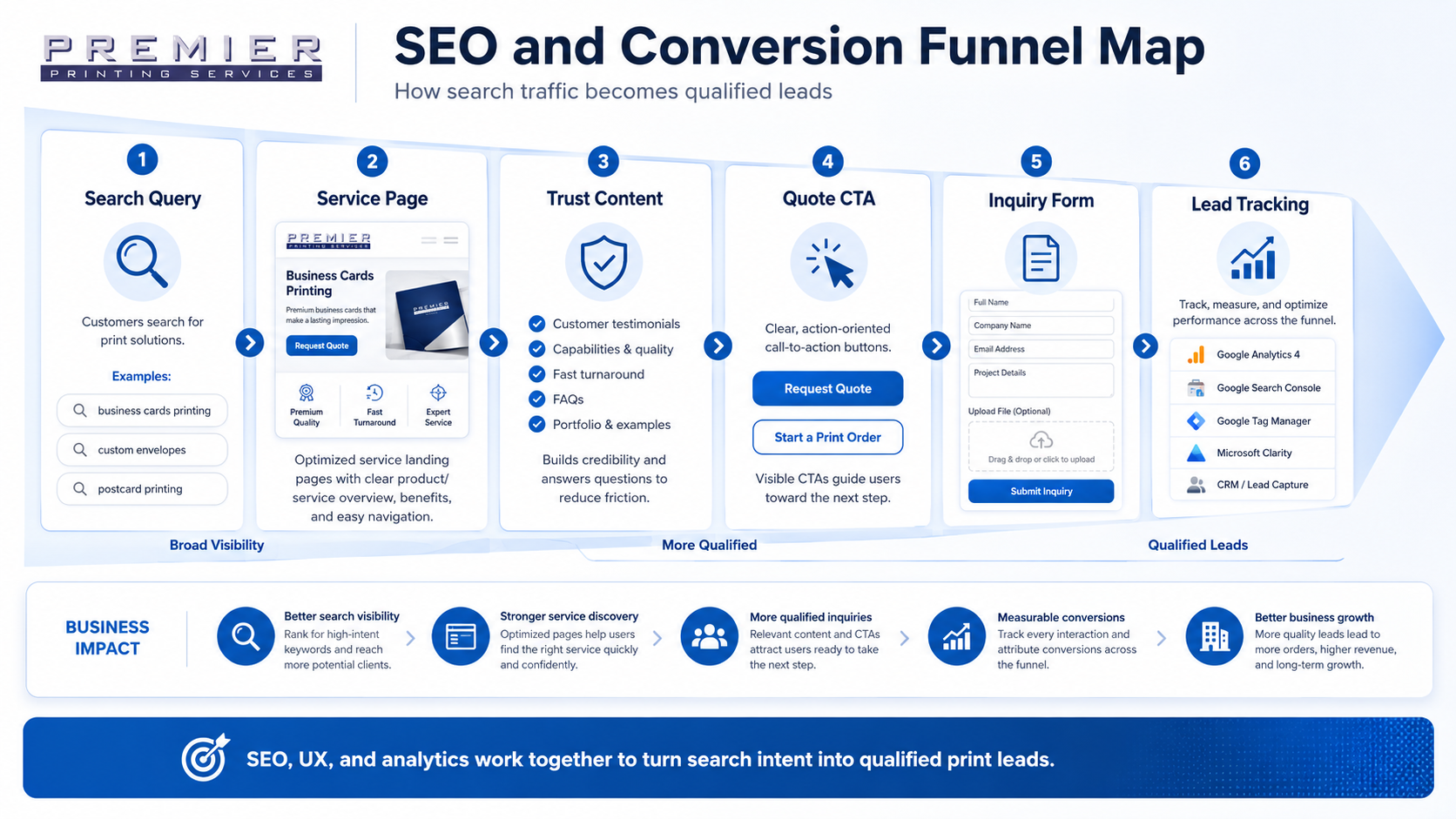 SEO and conversion funnel planning
Plan for Future B2B Customer Portal Workflows
Even though the shipped website was not a full portal, the project included thinking around how Premier could eventually support more advanced customer workflows.
B2B customers often need repeat ordering, account-specific products, order history, file uploads, approvals, and easier communication with the print provider. Mapping this helped define what a future customer portal could become.
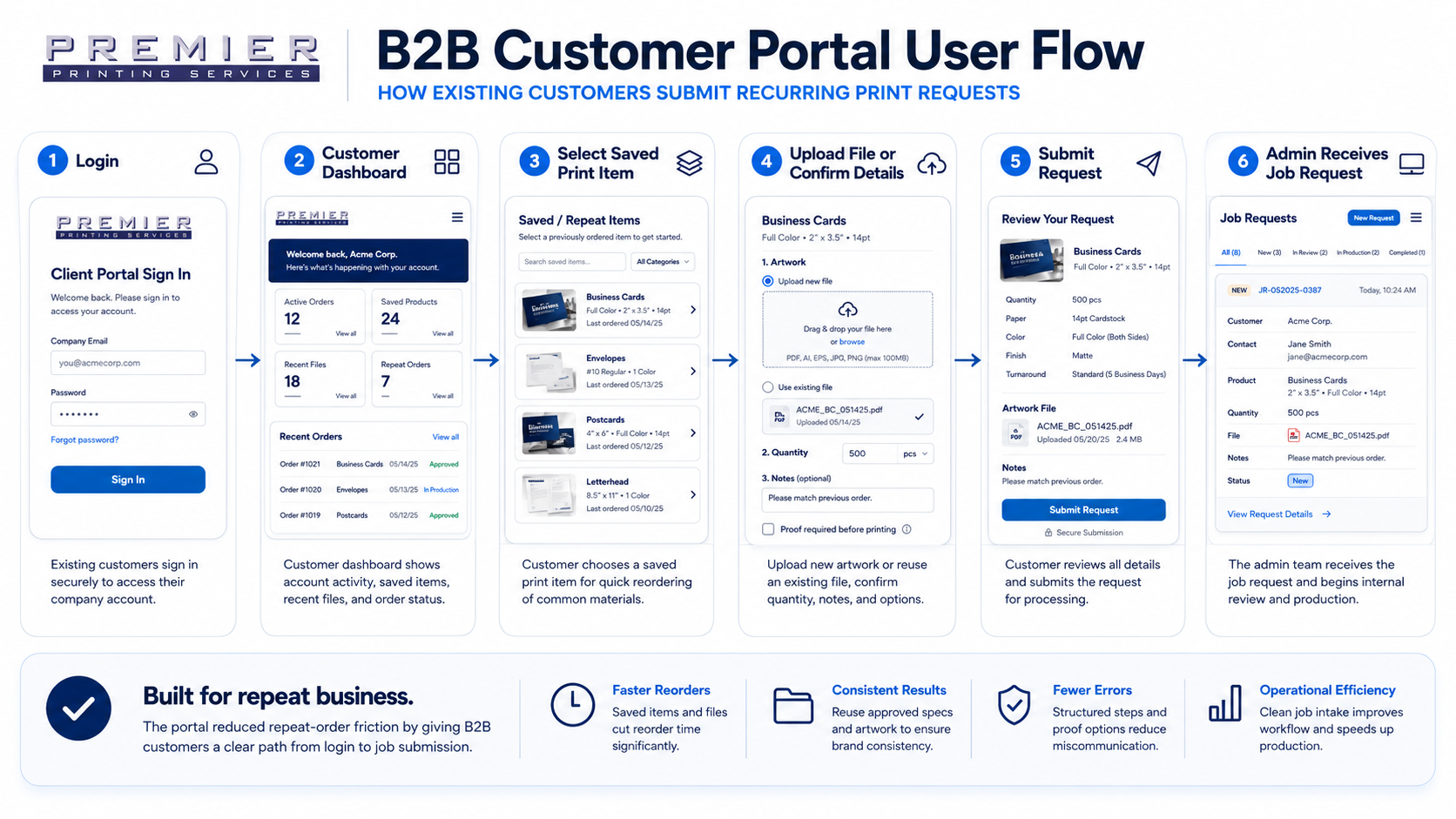 Future B2B customer portal flow
Leave Room for B2C Print Ordering
The future platform opportunity also included a more direct B2C ordering path.
For a print business, self-service ordering can be useful when the customer knows what they need and the product can be standardized. The design planning explored how a customer might move from product selection to upload, customization, checkout, and production handoff.
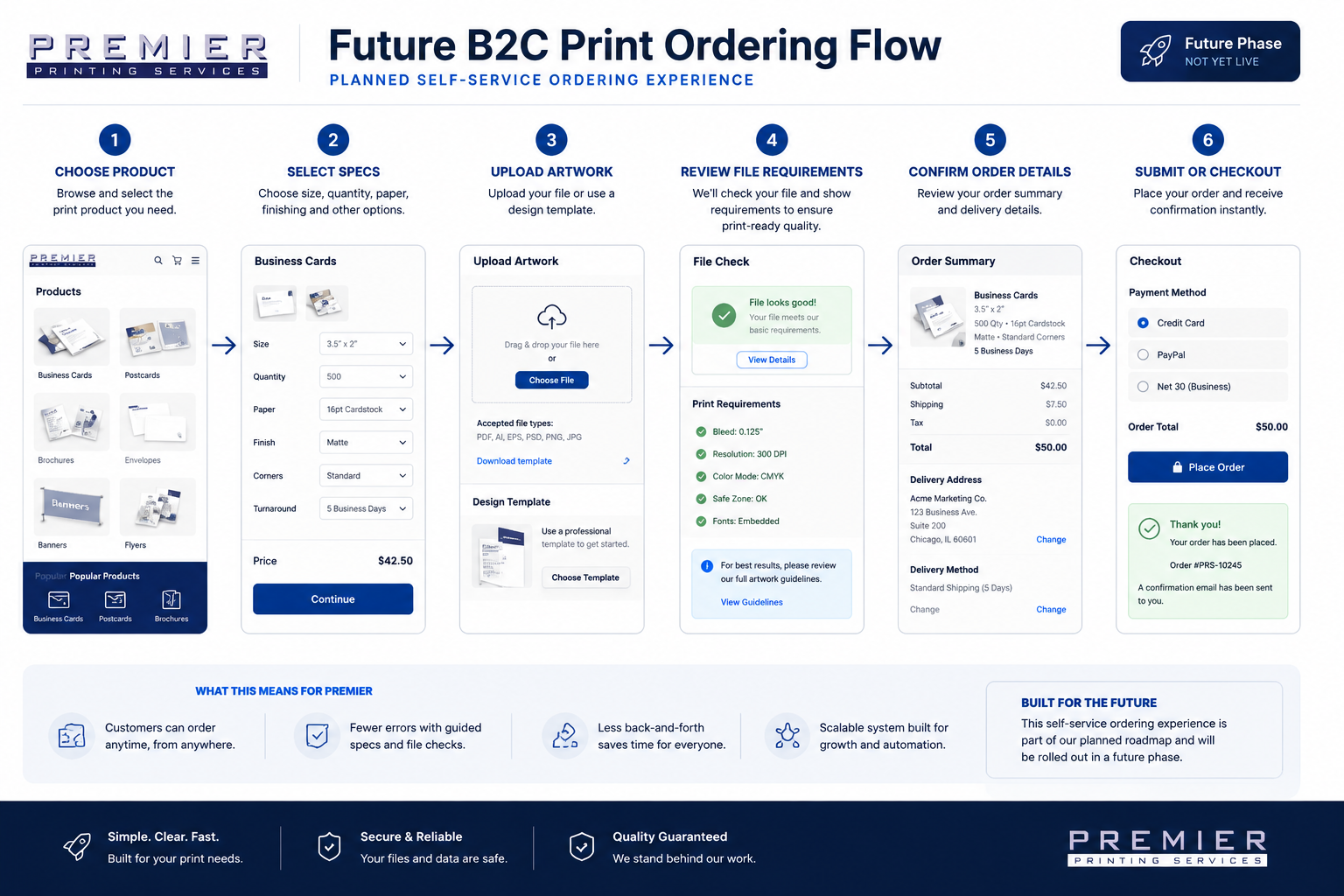 Future B2C print ordering flow
Result
The shipped website gave Premier Printing Services a clearer and more professional digital presence.
The new experience improved the foundation for:
- Explaining print services more clearly.
- Helping visitors find relevant service information.
- Making quote and contact paths easier to access.
- Building trust through stronger visual presentation.
- Supporting search and conversion strategy.
- Planning future customer portal and online ordering workflows.
The most important result was clarity. The website became a stronger entry point for customers who needed print services but might not know exactly what to ask for yet.
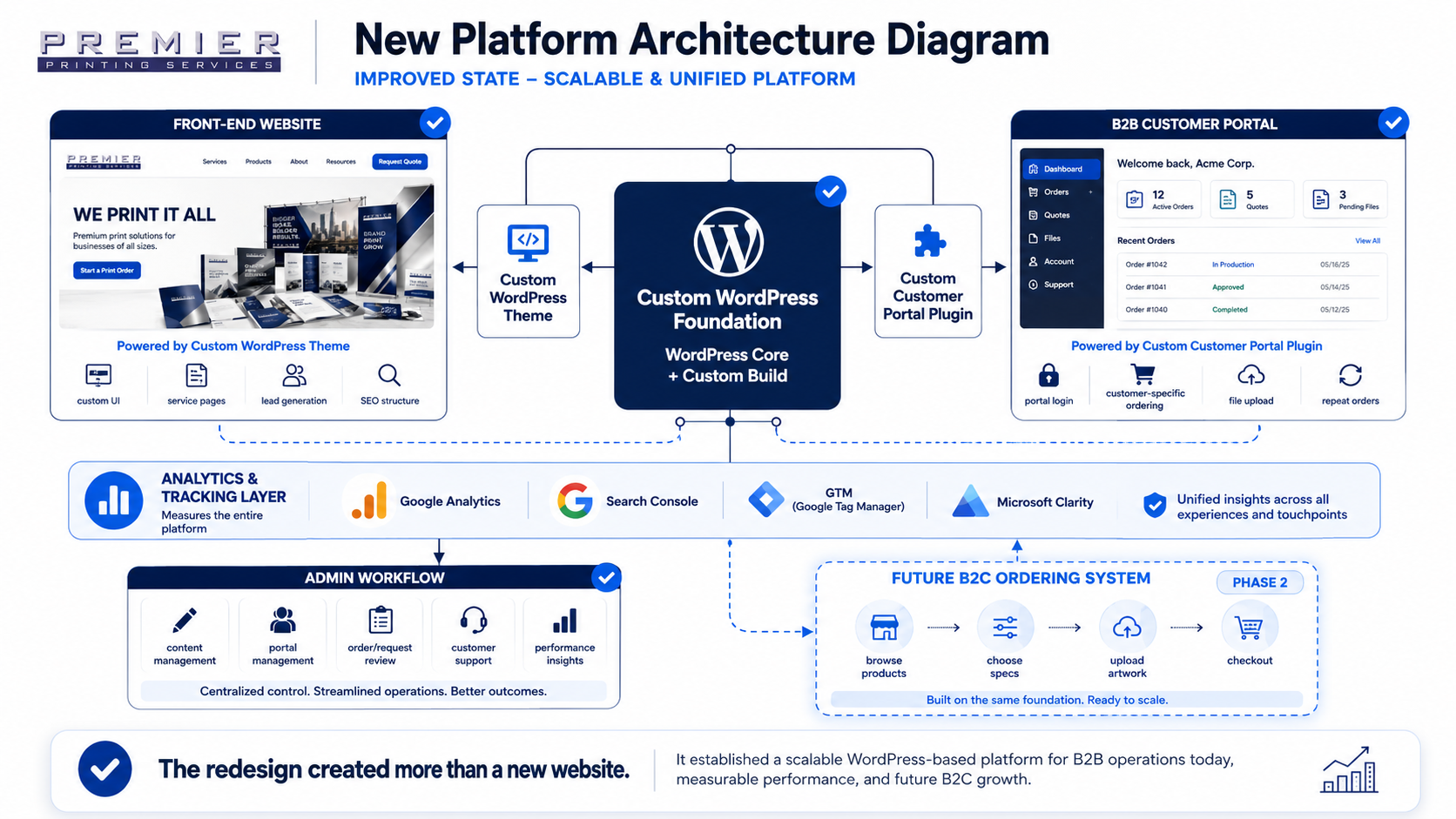 Website foundation and future platform architecture
KPI Framing
Because this project is best framed as a shipped service website and platform foundation, the strongest metrics are directional and behavioral rather than inflated performance claims.
Appropriate success signals include:
- New website shipped.
- Service discovery clarified.
- Quote paths made more visible.
- SEO and conversion paths mapped.
- Future B2B customer portal flow planned.
- Future B2C ordering flow planned.
- Stronger foundation created for customer self-service.
This is a useful UX/UI case study because it shows how a service business website can be designed with both immediate lead generation and future product-like workflows in mind.
Reflections
Premier Printing Services is a good example of why service websites still require UX thinking.
The work was not about adding unnecessary complexity. It was about making a practical business easier to understand and easier to contact, while creating a foundation that could eventually support more advanced customer workflows.
The biggest opportunity for future improvement would be to continue evolving the website into a true print service platform with account-based ordering, repeat order tools, upload flows, and quote tracking.
For the portfolio, this project helps show the bridge between web design and UX/UI strategy: the shipped site solves immediate marketing needs, while the supporting planning work shows how the experience could grow into a more robust digital product.