Ecommerce Optimization
Band Pro
Turned Band Pro's out-of-stock product friction into a lead-generation opportunity for high-intent buyers of professional camera equipment.
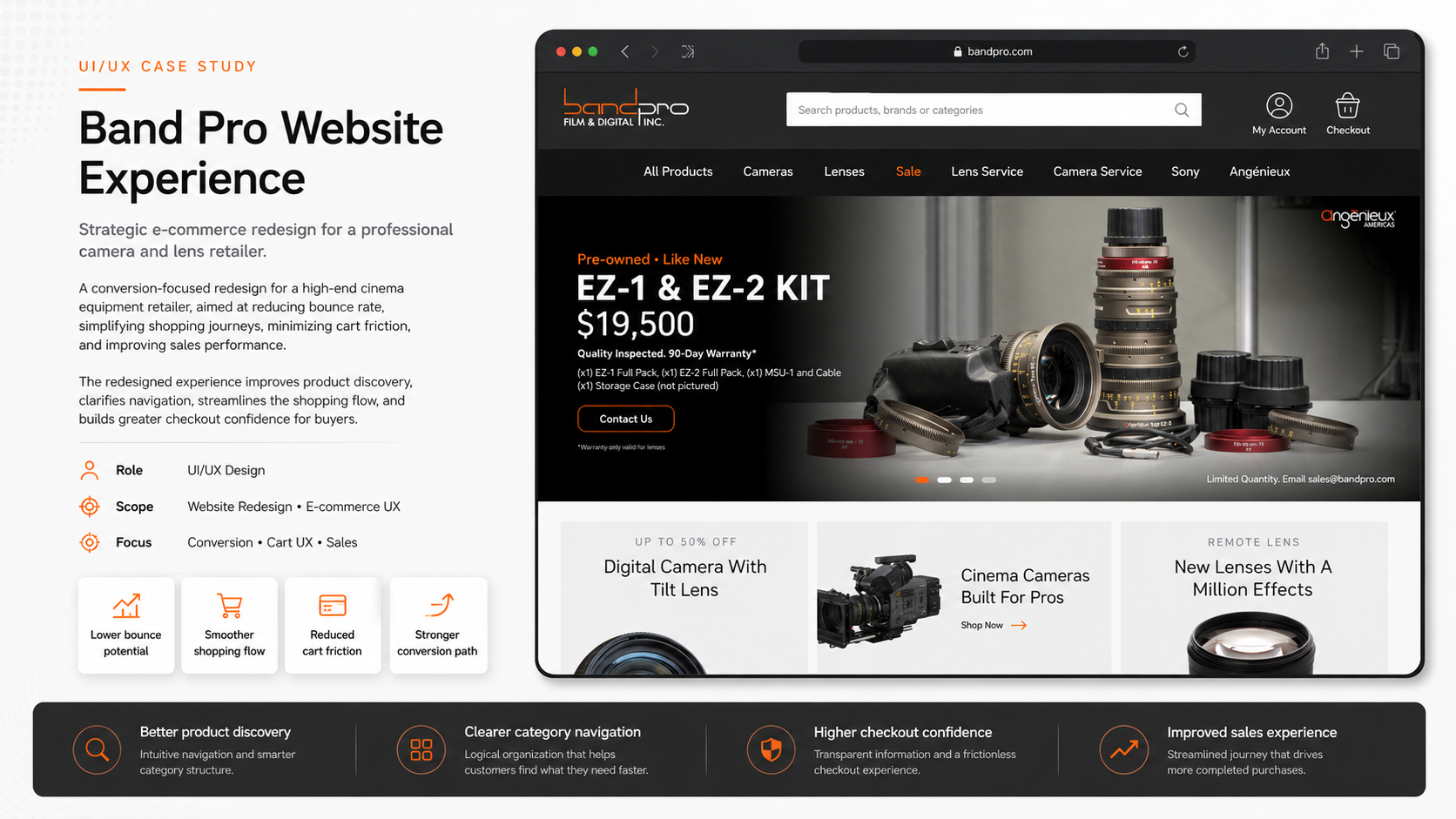
Band Pro's Magento store was losing qualified buyers when out-of-stock product pages gave users no useful next step, even though the sales team could often help source products or alternatives.
Changed the out-of-stock experience into an inquiry path, improved tracking and SEO foundations, and helped reduce bounce rate by an estimated 60%.
Quick Context
Band Pro was a B2B and B2C ecommerce store serving filmmakers, production companies, photographers, and professional camera buyers looking for high-end cinema and photography equipment.
I was hired as a Web Developer and Ecommerce Specialist as part of a small three-person team that included marketing and IT support. My role focused on improving the ecommerce experience, strengthening the Magento-based website, supporting SEO improvements, implementing tracking, and identifying conversion opportunities across the product journey.
At the start of the project, the website had two major business challenges.
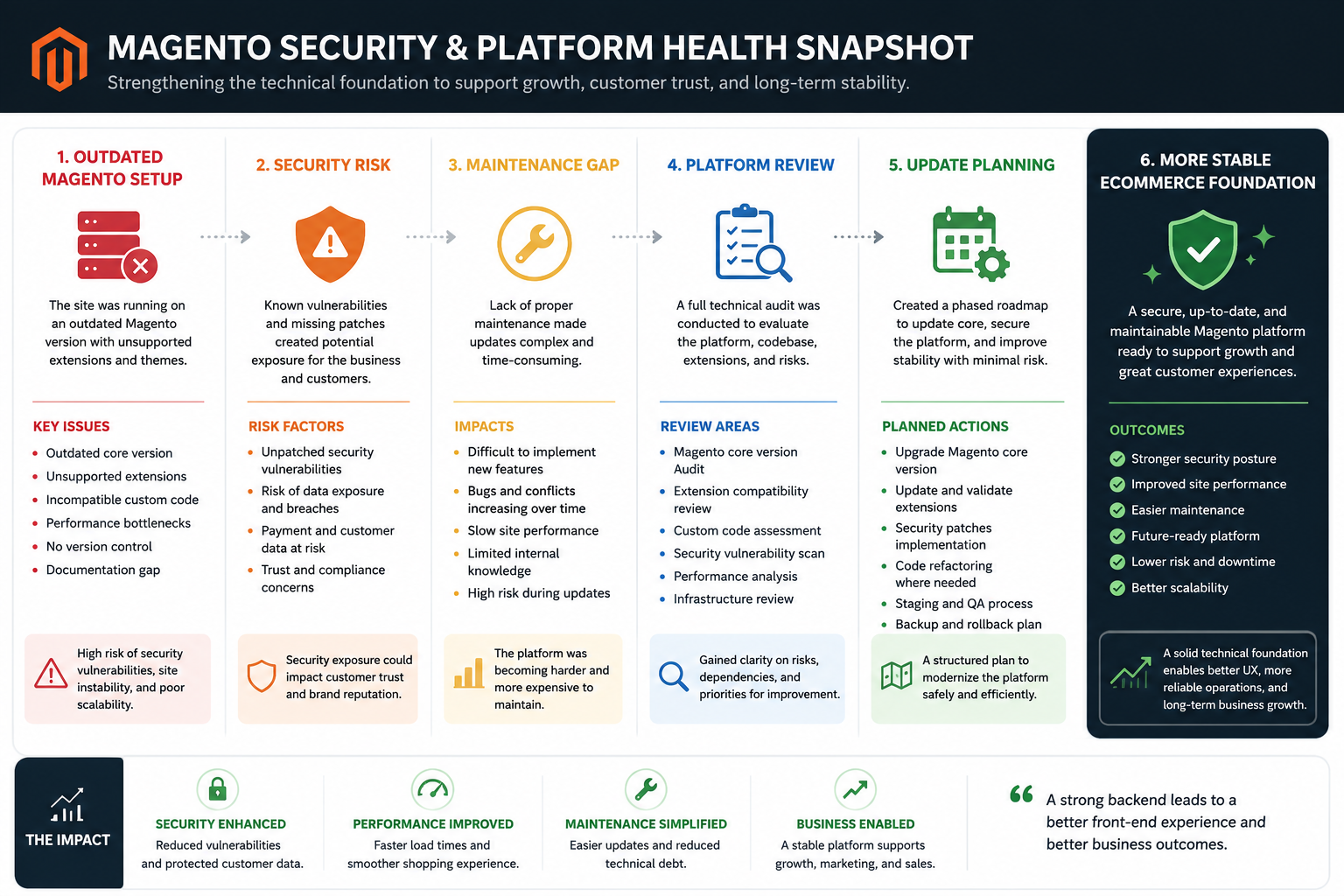
First, the Magento site had not been properly updated in a long time because the internal team did not have enough technical ownership over the platform. This created security concerns, maintenance risk, and performance issues.
Second, many products appeared as “out of stock” on the frontend. For a typical ecommerce store, that message means the purchase journey ends. But for Band Pro, the reality was more nuanced. Because of the high-value nature of professional camera equipment, salespeople could often contact manufacturers or suppliers directly and potentially source the product for the customer.
This meant the website was accidentally losing qualified leads.
Instead of treating stock availability as a hard stop, we reframed the problem: what if “out of stock” could become a conversation starter instead of a conversion dead end?
 Magento storefront and ecommerce context
Problems
The Website Was Losing High-Intent Buyers at the Product Level
The biggest ecommerce problem was not just that products were out of stock. It was that the interface communicated finality.
When a customer landed on a product page and saw “out of stock,” the experience suggested that the product was unavailable, there was no next step, the customer should leave and search somewhere else, and Band Pro could not help them.
For a high-end camera retailer, this was a major issue. These customers are not always casual shoppers. Many are production buyers, cinematographers, rental houses, agencies, or professionals making serious purchasing decisions. Even when they are not ready to buy immediately, they may still be valuable leads.
The existing product state created a gap between the business reality and the user experience. From the business side, the sales team may have still had options. From the customer side, the website made it look like there were none.
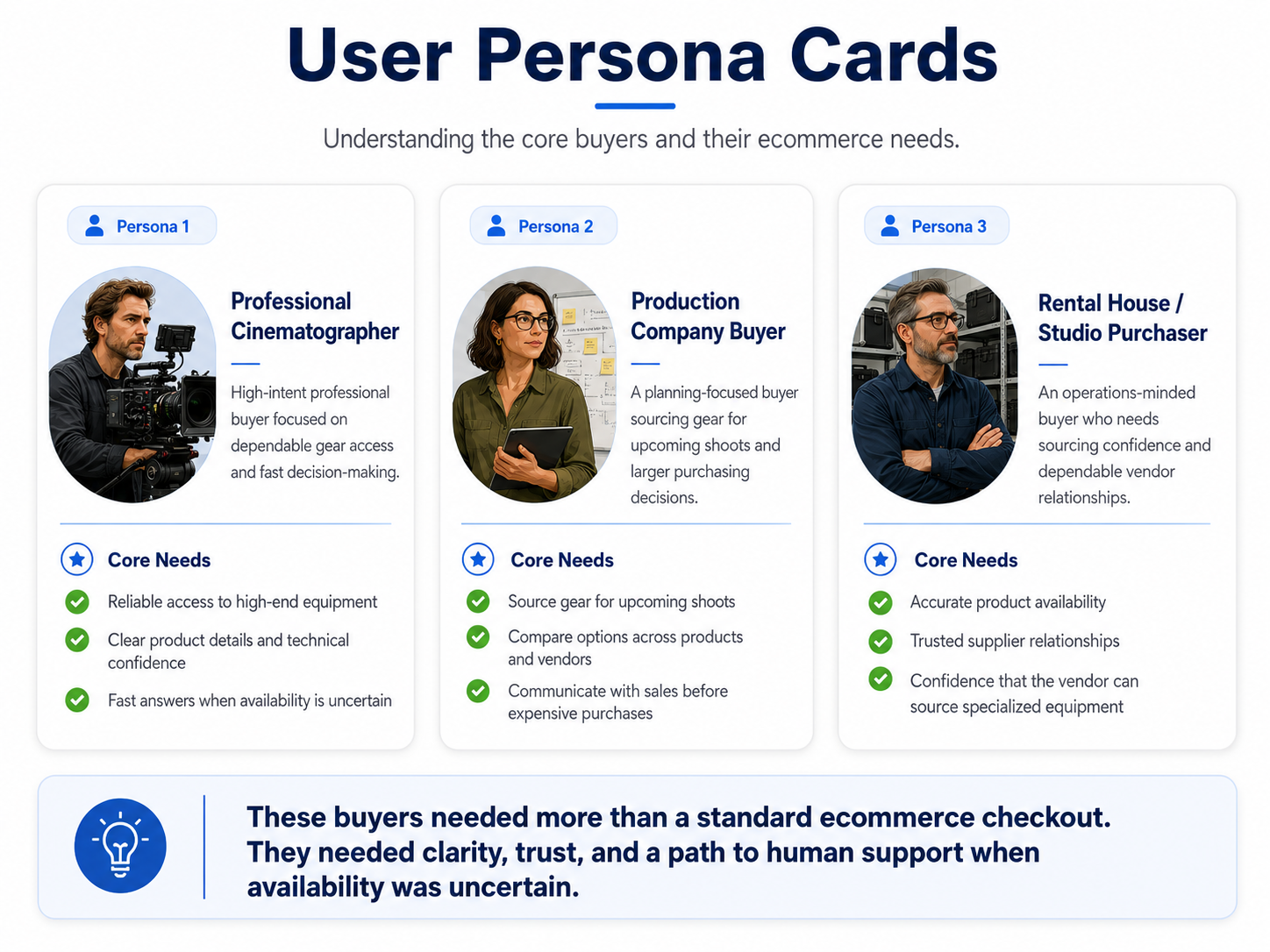 High-intent ecommerce personas
Magento Maintenance Created Security and Operational Risk
The website was built on Magento, but it had not been updated consistently. Because no one internally had deep ownership of the platform, the site was left with potential security vulnerabilities and technical debt.
This created several risks: the ecommerce platform could become increasingly difficult to maintain, security flaws could remain unresolved, updates could become risky because of unknown dependencies, performance and stability could degrade over time, and the team could lose confidence in making future improvements.
For an ecommerce business handling expensive professional equipment, platform trust mattered. Customers needed to feel confident browsing, submitting inquiries, and interacting with the store.
SEO and Product Discovery Needed Improvement
Band Pro wanted to increase website traffic and improve SEO performance. The site had valuable products, professional industry relevance, and clear business expertise, but the website experience needed better optimization to help customers find the right products.
The SEO challenge was tied to both content and structure. Product pages needed clearer conversion paths, category pathways needed to support discovery, the site needed stronger technical hygiene, search and social traffic needed to be tracked more clearly, and the team needed better visibility into which marketing efforts were driving users to the site.
Bounce Rate Remained High After Initial Traffic Improvements
During the first phase, SEO and site updates helped increase traffic and improve visibility. However, bounce rate remained a problem.
This showed that traffic alone was not enough. The issue was not only about bringing users to the website. It was about giving them a reason to continue the journey once they landed there.
The product page experience became a key focus because it sat at the intersection of SEO, ecommerce, lead generation, and sales support.
Marketing Attribution Needed Better Tracking
Because the team was also supporting social media marketing, it was important to understand how traffic from social campaigns behaved once users landed on the site.
Before improved tracking, the team had limited visibility into which campaigns were driving meaningful traffic, whether social pushes were leading to product engagement, whether users were bouncing from product pages, which pages needed conversion improvements, and how marketing and ecommerce activity were connected.
Decisions
Treat Out-of-Stock as a Lead Capture Opportunity
The most important UX decision was to change the meaning of the out-of-stock state.
Instead of leaving users with a dead-end message, we changed the product journey so that unavailable products could still generate an inquiry. The “out of stock” button was turned into a “Send us a message” or product inquiry action.
This allowed customers to ask about product availability, sourcing options, or alternatives. More importantly, it gave the sales team a chance to follow up with qualified buyers who were already expressing interest.
This decision aligned the website with how the business actually worked. The product may not have been physically sitting in the warehouse, but that did not mean Band Pro could not help the customer.
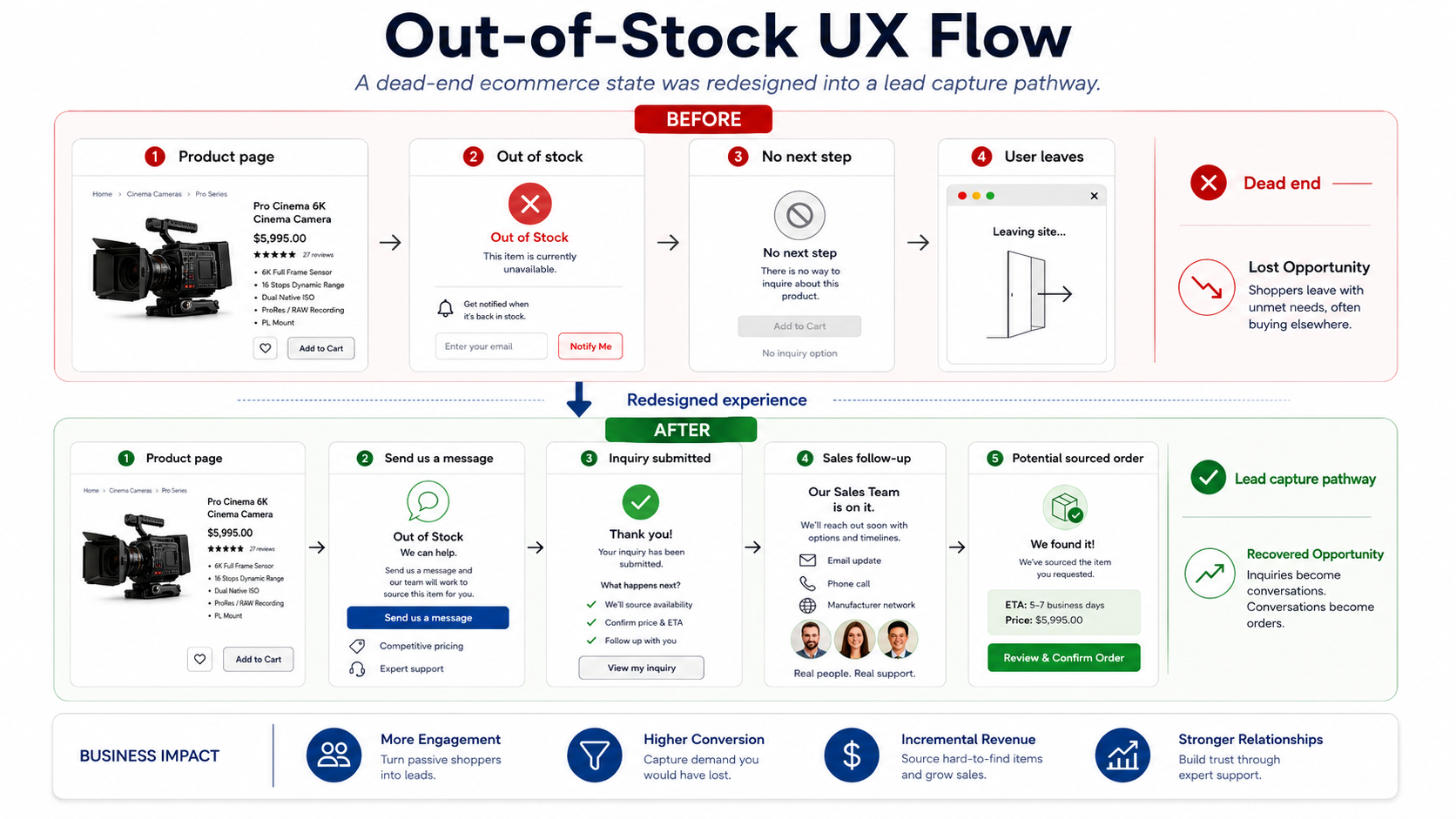 Out-of-stock to inquiry flow
Improve the Product Page Conversion Path
The product page needed to support more than one type of buyer intent.
Some users may have been ready to buy. Some needed availability confirmation. Some needed expert guidance before committing. Others were comparing high-ticket products across vendors.
Because of that, the product page experience needed a stronger fallback path. The inquiry CTA helped reduce friction by giving users a next step when direct checkout was not available.
This created a more flexible ecommerce model:
- In-stock product: continue toward purchase.
- Out-of-stock product: send inquiry.
- Complex product: contact sales.
- Uncertain buyer: start a conversation.
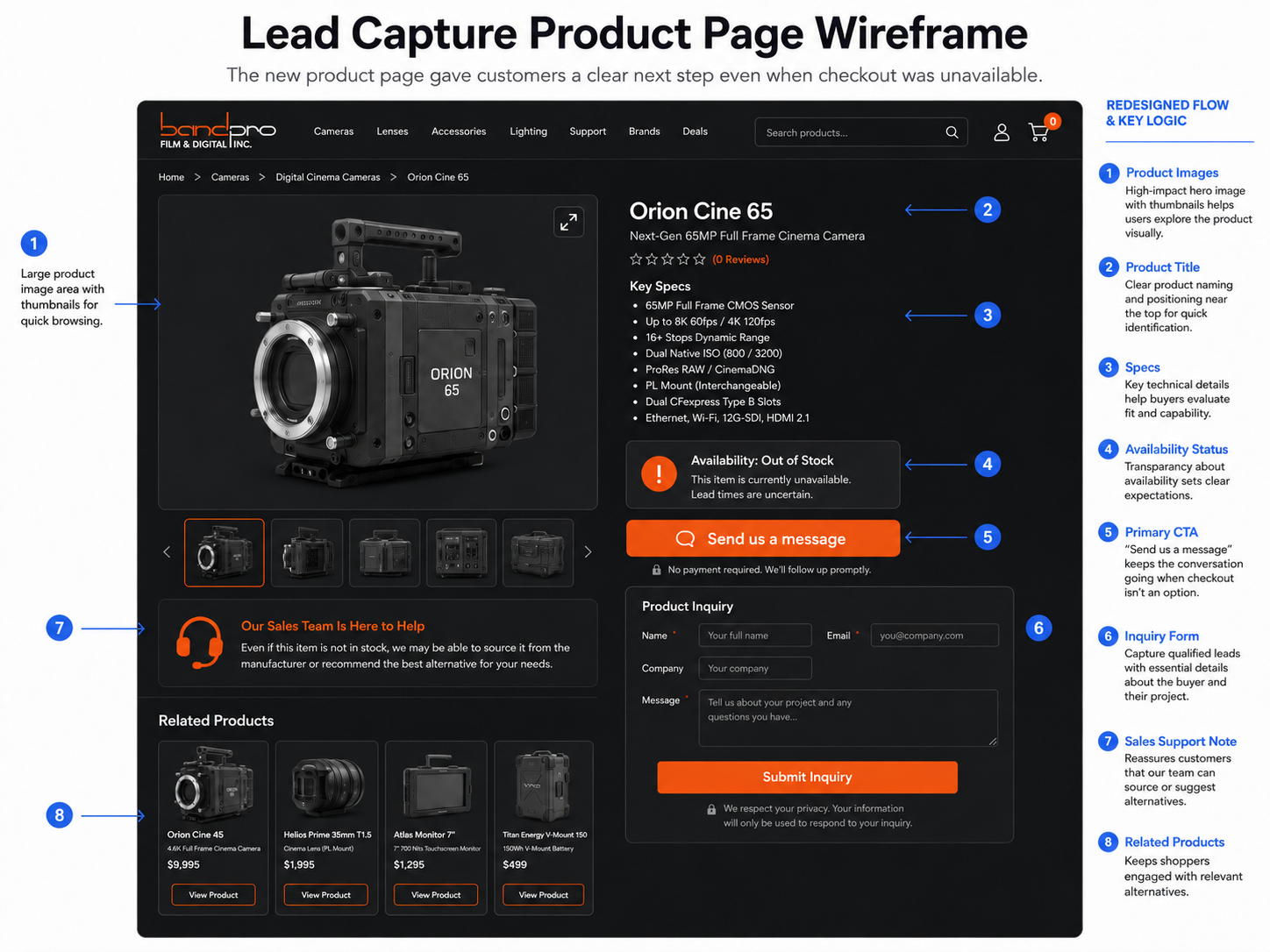 Lead capture wireframe for product inquiries
Prioritize Security and Platform Stability
Because the Magento site had not been updated in a long time, security and maintenance became foundational priorities.
The goal was not only to improve the frontend experience, but to reduce the operational risk behind it. This included reviewing the current Magento setup, identifying outdated areas, supporting updates where possible, and helping the business regain confidence in the platform.
Support SEO Improvements Before Deeper Conversion Optimization
The first phase focused on improving SEO, increasing traffic, and strengthening the website foundation.
This made sense because the site first needed more qualified visibility. However, once traffic increased, the data showed that bounce rate was still a problem.
That insight helped guide the next decision: improve the product-level journey. The project arc became visibility, measurement, bounce/drop-off insight, conversion-path improvement, and product dead ends turned into lead opportunities.
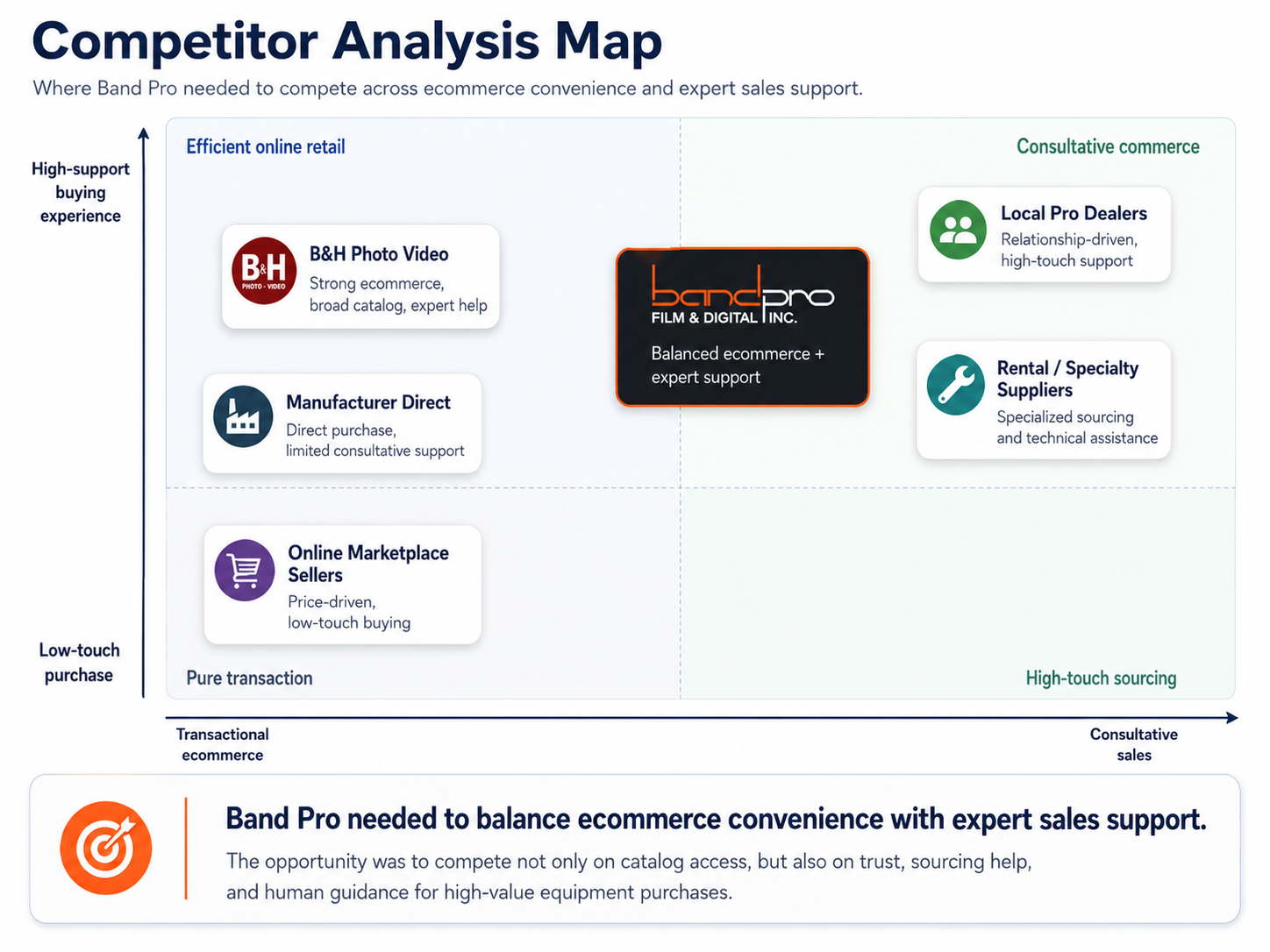 Competitor and ecommerce pattern analysis
Use GTM and Pixel Tracking to Connect Marketing With Ecommerce Behavior
Since the team was also running social media marketing campaigns, Google Tag Manager and pixel tracking were installed to better understand traffic behavior.
This helped connect marketing activity with ecommerce performance. Instead of only asking whether social media drove traffic, the team could start asking better questions: did campaign traffic visit product pages, did users bounce after landing, did users engage with inquiry CTAs, which traffic sources created the best leads, and which pages needed optimization?
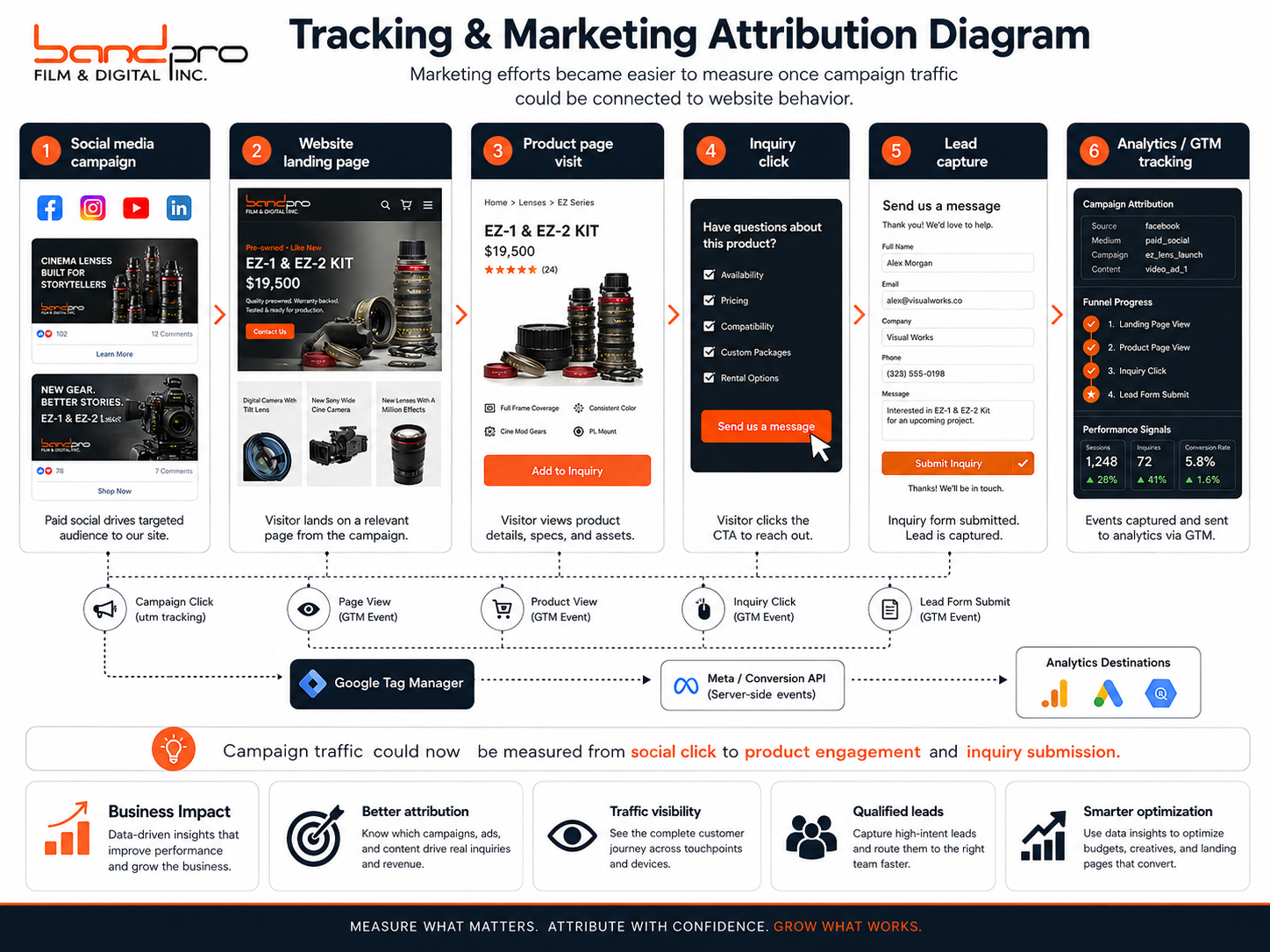 Marketing attribution and ecommerce behavior tracking
Use Stakeholder and Sales Team Input to Guide Practical UX Improvements
Because Band Pro had salespeople who understood customer needs, stakeholder and sales team brainstorming became important.
The sales team had insight into real customer behavior that analytics alone could not fully explain. They understood that some products could still be sourced even when not physically in stock, customers often needed reassurance before purchasing expensive equipment, product availability could require direct communication, and a conversation could be more valuable than a failed checkout journey.
This helped shape a UX solution that was practical, not theoretical.
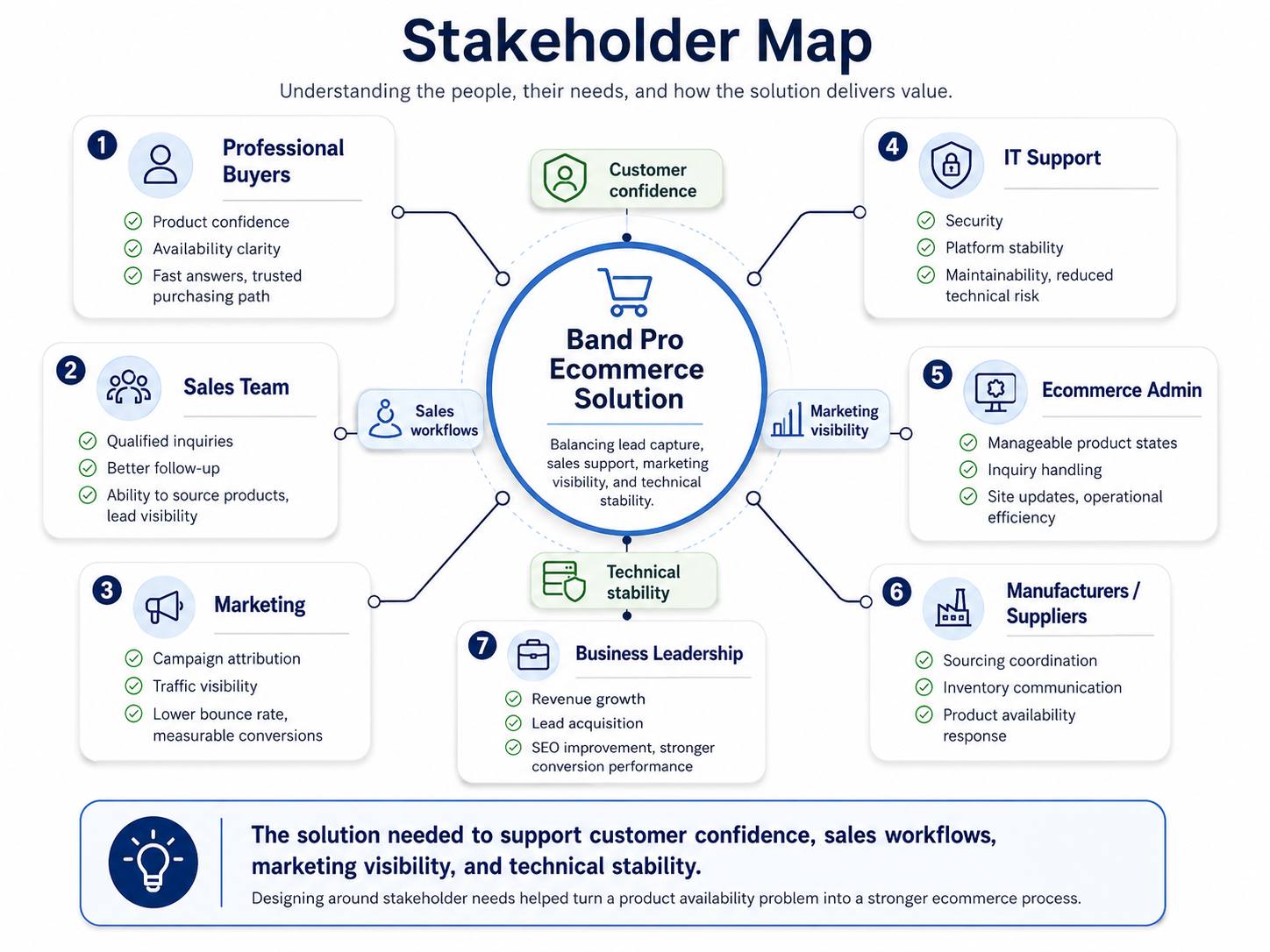 Stakeholder and sales-team insight map
Result
The first phase of the project created measurable improvements across traffic, SEO, lead generation, and engagement.
SEO and website updates helped increase website traffic. This gave Band Pro more visibility and brought more users into the ecommerce experience. The traffic increase validated that the site had growth potential once technical and SEO improvements were addressed.
The site became stronger from an SEO perspective through improved structure, technical updates, and content/product visibility work. This helped support Band Pro’s goal of increasing organic discovery and making the website more useful as both an ecommerce store and lead-generation channel.
Changing the out-of-stock experience into an inquiry path helped capture users who would have otherwise left the site. This was one of the most important outcomes of the project because it turned a negative product state into a business opportunity.
After changing the out-of-stock CTA into a message-based inquiry action, bounce rate improved significantly, with an estimated reduction of around 60%. This showed that many users were not necessarily uninterested. They simply needed a better next step.
The project also expanded the definition of conversion. Instead of only measuring completed purchases, the site could now capture product inquiries as a meaningful ecommerce conversion.
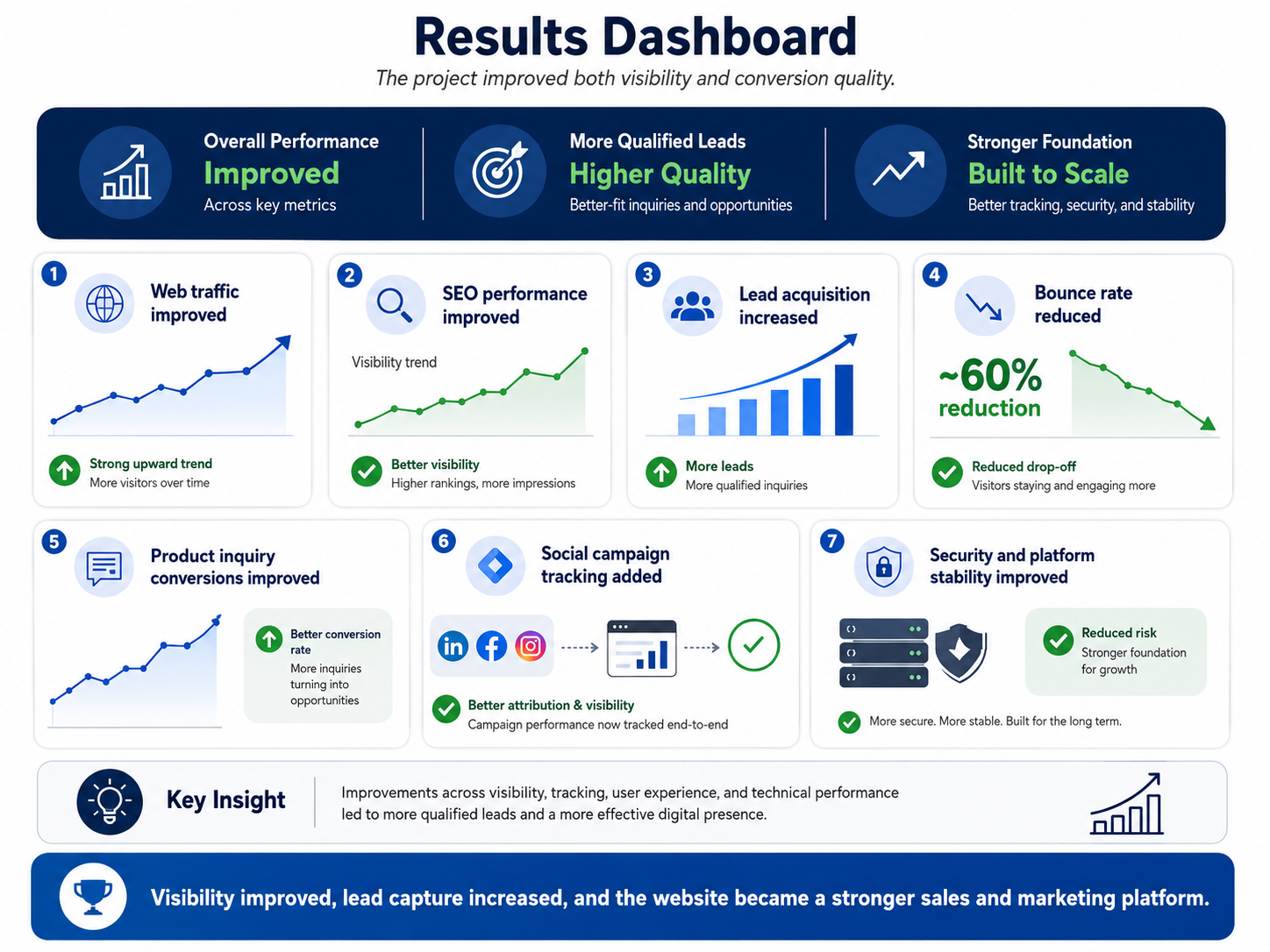 Results and ecommerce optimization outcomes
Reflections
This project reinforced that ecommerce UX is not always about pushing every customer directly into checkout.
For high-value products, especially in industries like film, photography, and professional production, the buying journey can be more consultative.
One of the biggest lessons was that a generic ecommerce pattern can accidentally hurt a specialized business. For a normal store, “out of stock” might mean the journey is over. For Band Pro, “out of stock” often meant, “talk to us, we may still be able to help.”
That difference mattered.
The project also showed the importance of listening to internal stakeholders. Salespeople understood customer behavior in a way that the website did not reflect yet. By translating their knowledge into the product page experience, we were able to create a more useful ecommerce journey.
Another key lesson was that traffic growth and conversion optimization need to work together. SEO brought more users to the site, but product-level UX improvements helped keep them engaged.
For future ecommerce projects, I would continue exploring more advanced product availability states, better inquiry forms tied to product SKUs, CRM integration for sales follow-up, automated lead tagging by product category, better measurement of inquiry-to-sale conversion, a clearer B2B buyer journey for high-value equipment, and product recommendation paths when items are unavailable.
The biggest takeaway was simple: a product page should never leave a motivated customer without a next step.